Best Hybrid Cars for City Driving in Britain
The best hybrid cars for city driving in Britain: Yaris, Jazz, Corolla ranked — full vs plug-in vs mild hybrid, battery myths, real-world MPG and used buying checks.
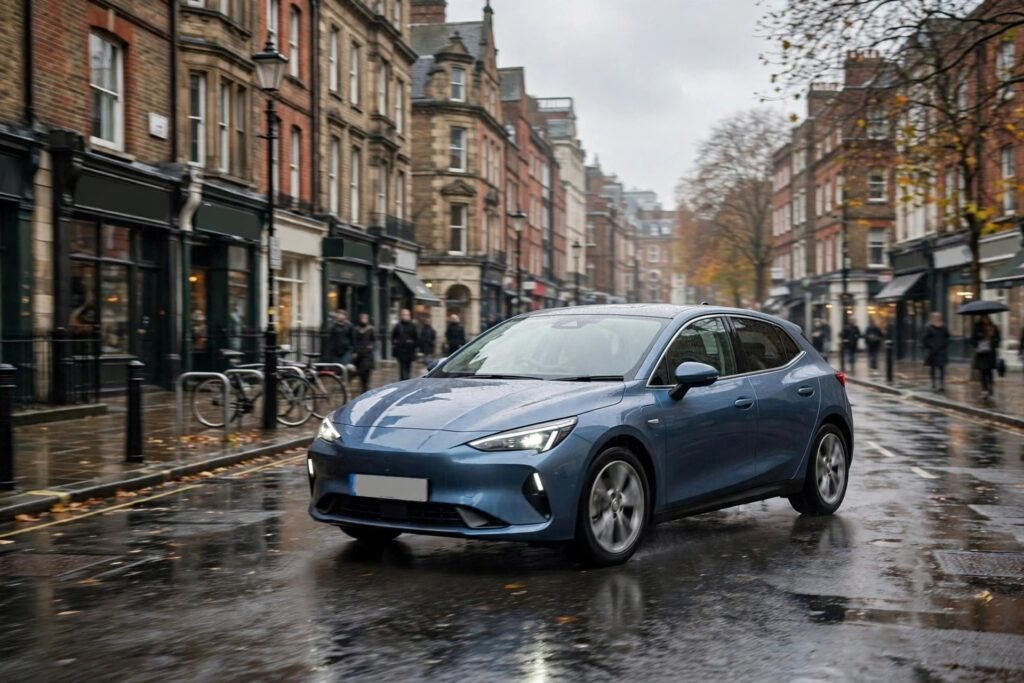
City driving is where hybrids make their case most convincingly. Stop-start traffic, 20mph zones, endless idling at lights — exactly the conditions where conventional engines waste fuel and hybrids sip it. With clean air zones expanding across British cities and fuel prices permanently elevated, the hybrid has gone from worthy compromise to the default sensible choice for urban drivers. But not all hybrids are equal, and the wrong choice for your driving pattern wastes the technology’s advantages. Here’s the definitive guide.
Why Hybrids Dominate City Driving
The physics is straightforward. Conventional cars are least efficient in cities: idling burns fuel for zero miles, acceleration from every junction gulps petrol, and braking wastes kinetic energy as heat. Hybrids attack all three: they switch the engine off when stationary, use electric motors for low-speed acceleration (the efficient zone for electric, the wasteful zone for petrol), and recapture braking energy through regenerative braking. The result: real-world urban economy of 55–70mpg versus 30–40mpg for equivalent petrol cars.
There’s a second urban advantage: emissions. Hybrids produce far less NOx and particulate matter in stop-start driving, and most meet the standards for clean air zones on GOV.UK — increasingly critical as more British cities introduce charging zones. Check any specific model’s compliance before buying if your city charges.
Full Hybrid vs Plug-in Hybrid vs Mild Hybrid: Know the Difference
Full (self-charging) hybrids — Toyota, Honda, Hyundai/Kia systems. The battery charges from the engine and braking; you never plug in. Electric-only range is short (1–2 miles), but the system continuously optimises. These are the proven, hassle-free choice — no behaviour change required, just better economy. Taxi fleets’ devotion to Toyota hybrids (routinely exceeding 200,000 miles on original batteries) is the reliability evidence.
Plug-in hybrids (PHEVs) — bigger batteries (20–40 miles electric range), charged from the mains. Brilliant if you can charge at home and your daily driving fits the electric range — many owners barely use petrol. Terrible if you can’t charge regularly: lugging a depleted heavy battery with a small engine gives worse economy than a conventional car. PHEVs reward specific usage patterns and punish others; buy one only if the pattern fits.
Mild hybrids (MHEVs) — a small electric motor assists the engine but can’t drive the car alone. Fuel savings are modest (5–10%), and they’re essentially conventional cars with better stop-start. Don’t pay a hybrid premium for mild-hybrid badging; the economy gains rarely justify it.
The Best Hybrid Cars for British Cities
Toyota Yaris Hybrid: The Urban Champion
The default answer for good reason. Superb real-world economy (60–70mpg in town achievable), compact dimensions for tight streets and parking, Toyota’s bulletproof hybrid reliability, and strong residuals. The latest generation is genuinely pleasant to drive, not just economical. Used examples from £12,000; new from around £23,000. For pure city use, nothing beats it pound-for-pound.
Honda Jazz Hybrid: The Clever Alternative
The Jazz’s “magic seats” create van-like versatility in a supermini footprint — prams, flat-pack furniture, bicycles all disappear inside. Honda’s hybrid system is refined and economical (55–65mpg urban), reliability is excellent, and the high seating position suits city visibility. Slightly pricier than the Yaris; more practical. The thinking family’s urban hybrid.
Toyota Corolla Hybrid: The Grown-Up Choice
For those needing more space — family-sized hatch or estate with 50–60mpg urban economy. The Corolla Touring Sports estate is arguably Britain’s most sensible family car: huge boot, hybrid economy, Toyota reliability. Less exciting than a crossover; vastly more rational.
Hyundai Kona Hybrid / Kia Niro Hybrid: The Crossover Compromise
If you want the elevated driving position and rugged looks, these do the crossover thing with genuine hybrid economy (50–55mpg). The Niro particularly impresses on practicality. You’ll pay more than the equivalent hatch and get slightly worse economy — the crossover tax — but for many buyers the format is non-negotiable.
Used Bargain: Toyota Auris Hybrid (2015–2018)
The previous-generation Auris Hybrid offers 90% of the Corolla’s virtues at half the price — £8,000–£11,000 buys well. Same proven hybrid system, same taxi-grade durability. The infotainment is dated and it’s no beauty, but as urban transport it’s almost unbeatable value.
When a Hybrid Isn’t the Answer
Mostly motorway miles: hybrids’ advantage shrinks at constant high speeds where the petrol engine does most work. A modern efficient diesel (for high milers) or petrol may match hybrid economy on motorways at lower purchase cost.
No charging + PHEV: as noted, a plug-in hybrid you never plug in is the worst of all worlds. Full hybrids need no charging and suit everyone; PHEVs suit only those with charging access.
Ultra-low annual mileage: if you drive 4,000 miles yearly, the fuel saving may never repay the hybrid purchase premium. Do the maths: (annual miles / mpg difference) × fuel price = yearly saving. Compare against the price premium.
Battery Anxiety: The Fear That’s Mostly Obsolete
“What if the battery dies?” Modern hybrid batteries routinely last 150,000–200,000 miles; Toyota warranties them for up to 10 years/100,000 miles (extendable with servicing). Replacement costs (£1,000–£2,000 for most models) are real but rare — and independent specialists now recondition packs for less. Battery failure is far less common than conventional gearbox or turbo failure in equivalent cars. The anxiety is a decade out of date.
Buying Used Hybrids: What to Check
The used hybrid market is now mature — and it’s where the smart money goes, since hybrids depreciate like normal cars while their reliability endures. When viewing: check the hybrid battery health (Toyota dealers can run a battery health check for around £50; some independents offer it too — worth it on cars over 8 years old), verify the service history (hybrid systems need the scheduled inverter coolant changes — skipped servicing can cause expensive failures), listen for the transition (the petrol-electric handover should be seamless; clunks or hesitation suggest issues), and check the 12V auxiliary battery (hybrids still have a conventional 12V battery for electronics, and it’s a common failure point — a £100 fix that strands the car completely). Favourite used buys: the Toyota Auris Hybrid (2015–2018, £8,000–£11,000), Honda Jazz Hybrid (2020+, £14,000+), and early Toyota Yaris Hybrids (£7,000–£10,000) — all proven, all economical, all with years of reliable service ahead.
The Bottom Line
For British city driving, a full hybrid — Yaris for compact efficiency, Jazz for versatility, Corolla for family space — is currently the rational optimum: dramatically better urban economy than petrol, no charging infrastructure needed, proven reliability, and clean-air-zone compliance. Choose plug-in only if you can charge daily and your mileage fits the electric range; ignore mild hybrids as a decision factor. The Energy Saving Trust provides independent data on real-world running costs for hybrids and EVs. And if your driving is mostly motorway, run the numbers before assuming hybrid is automatically best. For keeping any car healthy in urban use, our guide to AI car diagnostics helps catch city-driving wear before it becomes expensive. Taking your hybrid on a European road trip? See what to know before driving in France.
Frequently Asked Questions
Do hybrids need to be plugged in?
Full (“self-charging”) hybrids never need plugging in — the battery charges from the engine and regenerative braking. Only plug-in hybrids (PHEVs) need mains charging to deliver their best economy and electric range.
Are hybrids exempt from clean air zone charges?
Most full hybrids meet the emissions standards (Euro 6 for diesels, Euro 4 for petrols) that exempt them from CAZ charges — but check the specific model on GOV.UK’s vehicle checker. Compliance depends on the car’s certification, not the hybrid badge alone.
How long do hybrid batteries last?
Typically 150,000–200,000 miles in normal use, with manufacturer warranties of 8–10 years. Real-world taxi data shows many exceeding these figures. Battery degradation is gradual (slightly reduced economy) rather than sudden failure.
Is a hybrid or electric car better for city driving?
Pure electrics are cheaper to run and zero-emission, but cost more to buy and need charging access — a deal-breaker for the millions without driveways. Hybrids deliver 70% of the urban benefit with zero infrastructure requirements. For flat-dwellers and those without home charging, hybrids remain the pragmatic choice.