How to Treat Ingrown Hairs After Shaving: A Clear Guide
Here is how to treat ingrown hairs after shaving safely: dermatologist-backed steps to calm painful bumps, release trapped hairs and stop them returning.
The shave looked perfect. Twelve hours later, angry red bumps bloom along the bikini line, underarms, or jawline, each one a hair that curled back into the skin instead of growing out. Ingrown hairs are one of grooming’s most universal annoyances, and while they are usually harmless, they are painful, unsightly, and prone to infection if handled badly.
The good news: most ingrown hairs resolve with simple care, and they are largely preventable once you understand why they happen. Dermatologists see them constantly, and the advice is refreshingly consistent. This guide covers safe treatment, what not to do, and the shaving adjustments that stop them recurring.
Why Hairs Become Ingrown
An ingrown hair forms when the sharp tip of a freshly cut hair pierces the surrounding skin and grows sideways or curls back into the follicle. Curly and coarse hair is most susceptible, which is why the beard area and bikini line are hotspots. Shaving against the grain, stretching skin taut, and using dull blades all increase the risk considerably by cutting hair below the skin surface or creating sharp angled tips.
Dead skin cells compound the problem by blocking the follicle opening, forcing the growing hair to detour sideways. This is why exfoliation is the single most effective prevention measure, and why ingrown hairs cluster where skin is thickest or most friction-prone.
Safe Treatment: What to Do Right Now
Warm compresses
Apply a warm, damp flannel for ten to fifteen minutes, two or three times daily. Heat softens the skin, draws the hair nearer the surface, and eases the ache. This alone resolves many mild cases within days.
Gentle exfoliation
Once the area is calm, a gentle chemical exfoliant (salicylic acid or lactic acid) dissolves the dead skin trapping the hair. Avoid harsh scrubbing on inflamed bumps; you want to free the hair, not abrade the skin further.
Do not dig
Resist tweezers, pins, and fingernails. Digging at ingrown hairs causes scarring, hyperpigmentation, and infection, and often pushes the hair deeper. If a hair is visible as a loop at the surface, a sterilised needle can lift it, but never pluck hairs from inflamed follicles.
Keep it clean and calm
Wash gently, apply a fragrance-free moisturiser, and avoid tight clothing over the area while it heals fully. If a bump becomes increasingly painful, swollen, or shows pus, see your GP or pharmacist; infected follicles sometimes need treatment. The NHS advice on treating skin irritation covers when self-care is enough and when to seek help.
Prevention: Shave Smarter
Prevention beats treatment every time. Shave at the end of a warm shower when hair is soft, use a sharp multi-blade razor (replace blades every five to seven shaves), and apply proper shaving gel rather than soap, which drags. Shave with the grain on the first pass; only go against it if your skin tolerates it, and never stretch skin taut.
Rinse the blade after every stroke and store razors dry; a damp razor breeds bacteria. Multi-blade cartridges cut hair below skin level and invite ingrowns, while single-blade safety razors cut flush and cause fewer problems for susceptible skin. Consider whether daily shaving suits your skin: shaving every other day dramatically reduces ingrown hairs for many people. And afterwards, treat the skin kindly: a fragrance-free moisturiser and caring for skin after shaving with proper sun protection prevents the dark marks ingrown hairs leave behind.
Exfoliation: Your Best Defence
Build gentle exfoliation into your routine two to three times a week: a salicylic-acid body wash, an AHA lotion, or a soft exfoliating mitt used lightly. Consistency matters more than intensity. People who exfoliate regularly report dramatically fewer ingrown hairs within a month, because the follicle openings stay clear and hairs grow out unobstructed.
For the bikini line specifically, look for products formulated for intimate skin, fragrance-free and pH-appropriate. The dermatologist guidance on ingrown hairs from the British Association of Dermatologists supports regular gentle exfoliation as first-line prevention.
Clothing and Friction
Tight synthetic clothing traps sweat and rubs freshly shaved skin, creating ideal conditions for ingrown hairs. After shaving, wear loose, breathable fabrics for 24 hours where possible. This is also worth considering in your wider wardrobe: dressing to suit pale, sensitive skin often means choosing softer natural fabrics that reduce friction as well as flatter your colouring. Gym-goers should change out of sweaty leggings promptly rather than running errands in them.
Ingrown Hairs on Different Body Areas
Beard and neck
The neck is the classic trouble zone for men: hair grows in multiple directions, and shaving against the grain here almost guarantees ingrowns. Map your growth direction carefully and shave with it, even if that means shaving upwards on the neck and downwards on the cheeks. A single-blade safety razor, which cuts at skin level rather than below it, transforms chronic neck ingrowns for many men.
Bikini line
Coarse, curly hair plus friction from underwear makes this the most common site for women. Trimming with an electric trimmer instead of a close shave prevents most cases; if you prefer smooth, shave with the grain using a fresh blade and exfoliate gently between shaves.
Underarms and legs
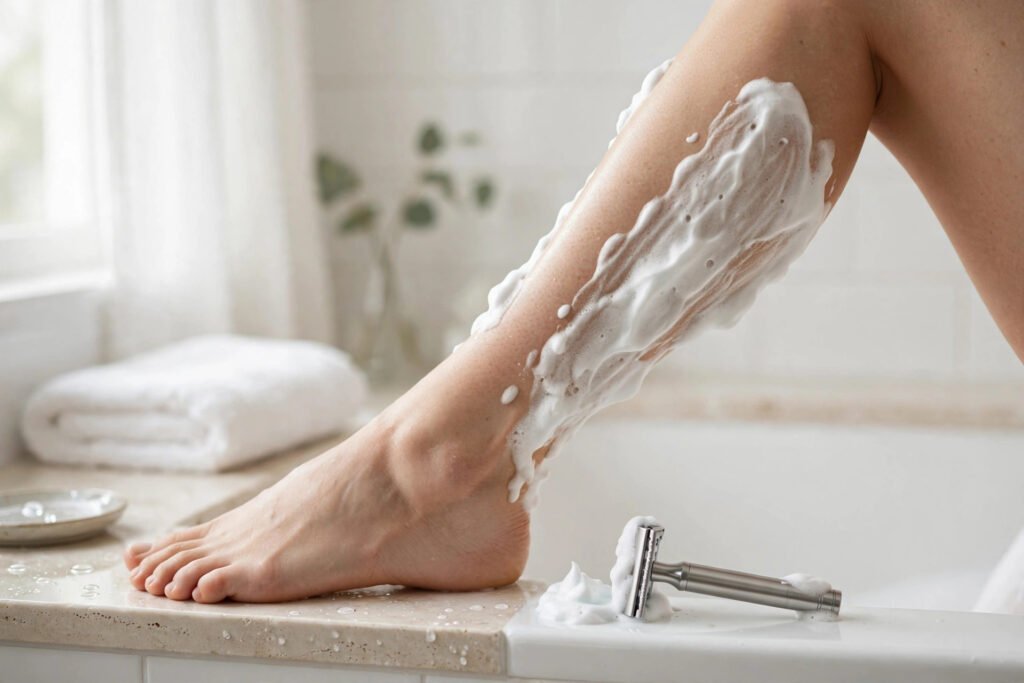
Underarm skin is thin and folds, trapping sweat and product. Exfoliate lightly and avoid deodorant immediately after shaving. Legs are more forgiving, but shaving dry or with dull blades still causes ingrowns along the ankles and knees where skin curves.
When Shaving Is Not the Answer
If ingrown hairs plague you despite perfect technique, consider alternatives. Electric trimmers cut hair above the skin surface, virtually eliminating ingrowns, at the cost of slightly less closeness. Depilatory creams dissolve hair without sharp tips but can irritate sensitive skin, so patch test. For a permanent solution, laser hair removal destroys the follicle itself; it works best on dark hair and light skin, though newer technologies suit a wider range, and requires a course of sessions at a reputable clinic.
Conclusion
Treating ingrown hairs after shaving comes down to patience and gentleness: warm compresses, mild exfoliation, no digging, and clean moisturised skin. Preventing them means sharper blades, shaving with the grain, regular exfoliation, and breathable clothing. Master the routine and the bumps become a rarity rather than a ritual. Your skin will thank you.
Frequently Asked Questions
How long do ingrown hairs take to heal?
Most resolve within one to two weeks with warm compresses and gentle exfoliation. Deeply embedded hairs can take longer; if a bump persists beyond three weeks or worsens, see your GP.
Should I pop an ingrown hair bump?
No. Squeezing pushes bacteria deeper, risks infection and scarring, and often fails to release the hair. Warm compresses and patience work better and leave no marks.
Why do I get ingrown hairs in the same spot?
Repeated trauma to the same follicles, from shaving against the grain or chronic friction, creates a cycle. Change the technique for that area specifically, exfoliate regularly, and consider trimming instead of shaving there.
Can ingrown hairs cause permanent scarring?
They can leave dark marks (post-inflammatory hyperpigmentation), especially on deeper skin tones, and picking can cause true scars. Sun protection on healing areas minimises marking.
Are ingrown hairs more common in summer?
Often, yes. More frequent shaving, sweat, and tight summer clothing combine to increase friction and follicle blockage. Exfoliating regularly and wearing breathable fabrics through the warmer months keeps them at bay.