Why Is the Ocean Salty? Simple Science Answer
Why is the ocean salty: simple science answer — where the salt comes from, why the sea doesn’t get saltier, and why some seas are saltier than others.
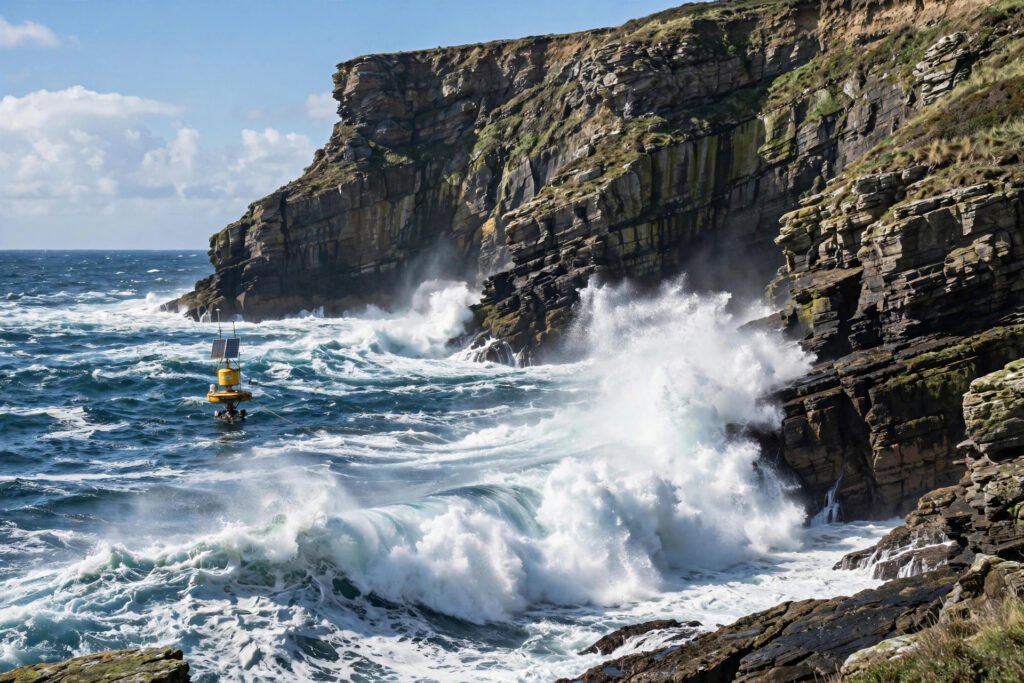
Taste seawater and the answer seems obvious: it is salty. But why? Rivers flow into the sea constantly, yet rivers are fresh. The salt had to come from somewhere, and the full story — involving rain, rocks, undersea volcanoes and 3.8 billion years of accumulation — is one of the elegant tales in earth science. Here is the simple science answer to why the ocean is salty.
Rain, rocks and rivers: the main delivery system
It starts with rain. Rainwater is slightly acidic — carbon dioxide from the air dissolves into it, forming weak carbonic acid. As this rain falls on land and flows over rocks, it slowly dissolves them, prying mineral ions loose: sodium, chloride, magnesium, calcium, potassium. Rivers carry these dissolved ions to the sea — every river on Earth is a faintly salty conveyor belt. The amounts per litre are tiny, which is why rivers taste fresh. But rivers have been running for billions of years, and the ocean has been collecting.
Why the sea keeps the salt: evaporation
Here is the key: when seawater evaporates, only pure water leaves. The salt stays behind. So the ocean is a giant still that has been distilling itself for aeons — water cycles out through evaporation and rain, salt accumulates. This is also why the saltiest seas are the ones with high evaporation and little inflow: the Red Sea and the Mediterranean run saltier than the Atlantic, while the Baltic, fed by many rivers and with limited evaporation, is brackish. If you have swum in the Mediterranean and floated effortlessly, you have felt this concentration gradient personally — and if you are planning coastal time, Devon’s family-friendly beaches offer a gentler introduction to sea swimming than the super-salty Med.
The ocean floor contributes too
Rivers are only part of the story. Hydrothermal vents — underwater volcanic fissures along mid-ocean ridges — spew mineral-rich superheated water directly into the deep ocean, adding significant salts. And the seafloor itself exchanges ions with seawater continuously. Scientists estimate rivers deliver most of the sodium and chloride, while vents and seafloor reactions supply much of the magnesium and other elements. The ocean’s chemistry is a dynamic balance, not a static bucket.
Why is it not getting saltier forever?
A sharp child will spot the problem: if salt only accumulates, why isn’t the ocean saturated by now? Because salt leaves too, just more slowly. Sea spray carries salt onto land; sediments bury salts on the seafloor; marine organisms build shells from calcium carbonate, locking minerals away; and tectonic processes subduct salt-bearing sediments into the mantle. The ocean reached a rough equilibrium long ago — inputs and outputs balanced — which is why salinity has been stable for hundreds of millions of years. It is a self-regulating system, like much of earth science.
What the salt does: why it matters
Salinity is not trivia — it drives the planet’s climate engine. Salt makes seawater denser, and differences in temperature and salinity drive the great thermohaline circulation: the global conveyor belt of ocean currents that moves heat around the planet and keeps Britain far warmer than its latitude deserves. Changes in salinity from melting ice are one reason scientists watch the North Atlantic so closely. Salt also sets the freezing point of seawater (about −2°C) and shapes entire marine ecosystems — which is why marine conservation matters, and organisations like the Marine Conservation Society work to protect the seas whose chemistry took billions of years to balance. The Met Office explains how ocean salinity feeds into the weather systems it forecasts.
Fun facts for the curious
If you spread all the ocean’s salt over the land, it would bury the continents under 150 metres of salt. The Dead Sea, at nearly ten times ocean salinity, is so dense you cannot sink. And your own blood is about as salty as the ancient seas life evolved in — roughly a third of modern ocean salinity — a chemical memory of our origins. Next time you swim, you are floating in water whose salt has been cycling since before there were fish. Britain’s own coastline offers plenty of places to experience the sea firsthand — from Norfolk’s scenic coastal walks to quiet coves, the salt is the same everywhere you go.
The Dead Sea and other super-salty waters
The open ocean sits around 3.5 per cent salinity, but enclosed waters tell more extreme stories. The Dead Sea, nearly ten times saltier, is so dense that swimmers bob like corks — and so hostile that almost nothing lives in it, hence the name. Its salt comes from the same river-delivery process, concentrated by ferocious evaporation with no outlet. Don Juan Pond in Antarctica, a tiny hypersaline lake, stays liquid at −50°C because its calcium-chloride brine barely freezes — the saltiest natural water on Earth.
These extremes are natural laboratories: scientists study Dead Sea microbes for insights into life’s limits, informing the search for life on Mars (whose ancient waters were similarly briny). They also warn of what happens when the balance breaks — the Aral Sea’s man-made desiccation left a salt desert, an ecological catastrophe. The ocean’s stable 3.5 per cent is not inevitable; it is a maintained equilibrium, and the extreme waters show what the chemistry looks like when the maintenance fails. Balance, it turns out, is the whole story. One more wonder: the ocean’s salt makes it a time capsule. The isotopic composition of seawater records billions of years of geological history — scientists read ancient oceans in salt deposits and fossil shells like tree rings. Every grain of sea salt you taste has cycled through rocks, rivers, seas and skies for longer than complex life has existed. It is, quite literally, ancient.
Conclusion
The ocean is salty because slightly acidic rain dissolves minerals from rocks, rivers carry them to the sea, and evaporation leaves the salt behind — accumulated over billions of years, balanced by outputs, and seasoned further by undersea vents. Simple to state, billions of years in the making.
Frequently Asked Questions
Why is the sea salty but rivers are not?
Rivers carry tiny amounts of dissolved minerals from rocks — too little to taste. The ocean has collected those minerals for billions of years while evaporation removes only pure water, concentrating the salt.
Where does ocean salt come from?
Mostly from rain dissolving minerals out of rocks on land, delivered by rivers, plus significant input from hydrothermal vents and seafloor reactions on the ocean floor.
Is the ocean getting saltier?
No — it reached equilibrium long ago. Salt leaves via sea spray, sediment burial, shell-building organisms and tectonic subduction, balancing the inputs.
Why is the Mediterranean saltier than the Atlantic?
High evaporation, hot climate and limited freshwater inflow concentrate its salt. Enclosed, evaporative seas are always saltier than the open ocean.
Does ocean salt affect the climate?
Yes, significantly — salinity differences drive the deep-ocean circulation that distributes heat globally. That is one reason scientists monitor North Atlantic salinity closely.
Could the ocean get saltier over time?
Very slowly — rivers keep delivering dissolved salts and evaporation keeps concentrating them. But on human timescales the ocean’s salinity is stable, and melting ice currently freshens some regions faster than salt accumulates.
Why is the Dead Sea so much saltier than the ocean?
It is a closed basin in a hot climate: water flows in and evaporates, but salts cannot escape. The same concentration effect explains salt lakes worldwide — evaporation without an outlet.