
How to Balance Work and Family Life Working From Home
Balancing work and family life when working from home: visible boundaries, shutdown rituals, defended hours — and dropping the guilt.
Working from home promised freedom, but for many parents it delivered something else: the feeling of doing two full-time jobs badly at the same time. If you’re trying to figure out how to balance work and family life when working from home, you’re not failing — the setup is genuinely hard. Here’s what actually helps, from people who’ve made it work.
Accept the core tension
The problem isn’t your time management; it’s that home used to be the place you recovered from work, and now it’s both. Your brain never gets the commute’s psychological “switching off” moment. So you have to build artificial boundaries — physical, temporal and digital — that the office used to provide for free.
How to balance work and family life when working from home
1. Create a shutdown ritual
At the end of the workday, do something that tells your brain work is over: close the laptop and put it in a drawer, change your clothes, take a 10-minute walk round the block. It sounds silly; it works remarkably well. The physical act of “leaving” — even if you’re walking to the kitchen — creates the boundary the commute used to provide.
2. Make your hours visible
Stick your working hours on the fridge. When the kids (and your partner) can see “Mum/Dad is working until 3pm”, it removes 90% of interruptions and guilt. Use a simple signal — headphones on means do not disturb unless bleeding or burning. Enforce it kindly but consistently for two weeks and it becomes law.
3. Protect deep work with time blocking
Split the day into blocks: deep work when the kids are at school or napping, admin and calls in the gaps, family time ring-fenced like a client meeting. Tell your team your core hours and defend them. Most “urgent” messages survive a two-hour wait. If your employer offers flexible working formally, get the arrangement in writing — GOV.UK’s flexible working guidance sets out your rights to request it.
4. Stop working to the school-run edges
The classic WFH parent trap: working 9–3, doing the school run, then “just finishing off” until 9pm. That evening creep destroys family time without you noticing. Set a hard stop and mean it. If the work doesn’t fit in the hours, that’s a workload conversation with your manager, not a you problem to solve at 10pm.
5. Outsource the friction
The mental load of running a house while working is the invisible killer. A cleaner for two hours a week (£25–£35) is the highest-ROI purchase many WFH parents make. Batch-cook on Sundays, use online grocery delivery, and lower your standards on the ironing — nobody has ever been promoted for crisp pillowcases. Our cleaning schedule for busy people helps systematise the rest.
Dealing with guilt (both directions)
WFH parents get guilt from both sides: guilty for working while the kids are home, guilty for parenting while on the clock. Here’s the reframe: your kids seeing you work is not damage — it’s modelling. And being home for the 3:30pm snack and chat is something office parents would kill for. You don’t need to be 100% present 100% of the time; you need to be fully present in the blocks you’ve ring-fenced. Quality of attention beats quantity of hours.
Make the arrangement work for your partner too
If both parents are home, coordinate explicitly: who has the kids when, whose meeting takes priority, who does the school run on which days. A shared calendar isn’t romantic, but neither is a row about who “always” does pickup. Our roundup of family schedule apps can take the admin out of it.
Know when the setup isn’t working
Sometimes the honest answer is that full-time WFH with young kids at home isn’t sustainable — and that’s not failure, it’s data. Options: part-time nursery or a childminder for core hours, coworking space two days a week, or negotiating hybrid with your employer. Spending money on childcare to protect your earning hours is usually the right maths.
Set up a workspace that isn’t the sofa
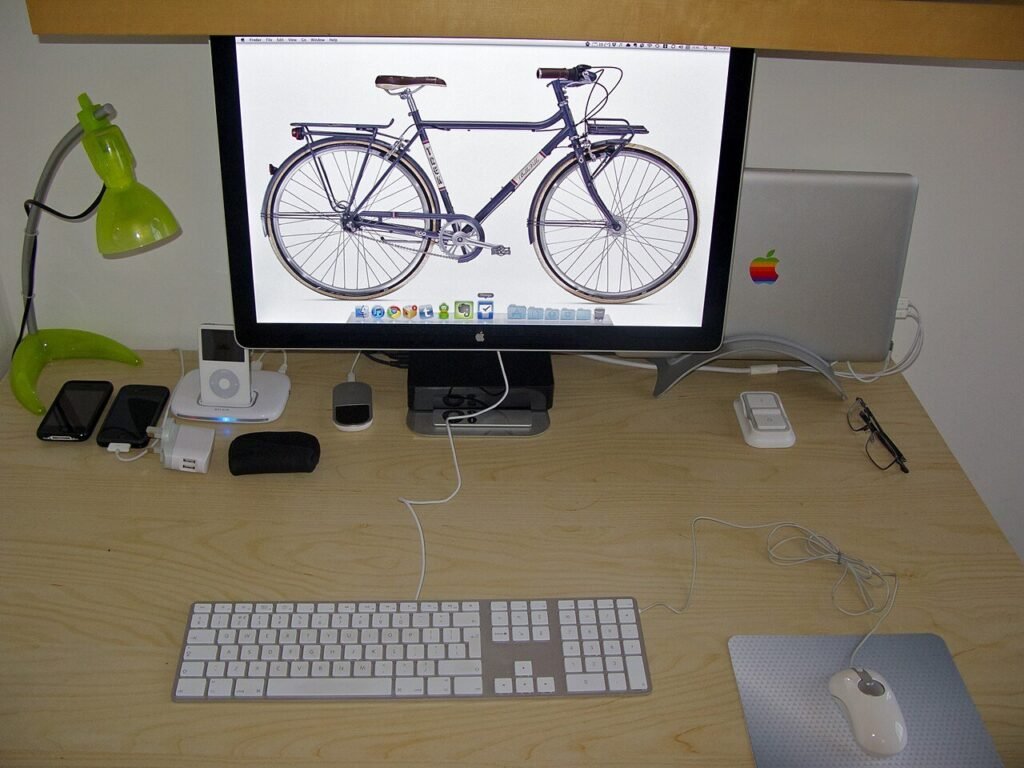
If you can, work somewhere that isn’t where you relax — even a corner of the bedroom with a folding desk beats the sofa. The sofa is where boundaries go to die: bad posture, constant TV temptation, and your brain never distinguishing work from rest. A proper chair, a monitor at eye level, and a door you can close (even a bedroom door) transform both your output and your ability to switch off. If space is truly tight, a laptop stand and separate keyboard (£30 total) at the kitchen table still beats hunching over the coffee table.
Managing up: the conversation with your manager
Many WFH parents suffer in silence instead of negotiating. Have the explicit conversation: “My core productive hours are X–Y; I’m offline for school pickup at Z but back online after.” Most managers prefer predictable boundaries to vague always-on availability. Frame requests around output, not hours — “I’ll deliver the same results working 8–3 plus an evening hour” is a business case, not a favour. And use your statutory rights: eligible employees can make a formal flexible working request, and employers must consider it reasonably. Put agreements in writing so they survive team changes.
The Sunday planning session
Fifteen minutes on Sunday evening prevents a week of friction. Both partners (or the whole household) review the week ahead: who has late meetings, which days need early pickup, where the crunch points are. Put it in the shared calendar there and then — not “I’ll add it later” (you won’t). This single habit eliminates most mid-week “but I thought YOU were doing pickup” arguments and lets you spot overloaded days before they happen. Pair it with a quick meal plan and the week’s logistics are essentially solved before Monday’s alarm.
The takeaway
Balancing work and family life when working from home comes down to visible boundaries, a real shutdown ritual, defended hours, and dropping the guilt. You’re not trying to be two people at once — you’re one person with a well-organised day. Set the hours on the fridge, close the laptop drawer at 5:30, and go be present. The work will be there tomorrow; the school-run years won’t.







1 thought on “How to Balance Work and Family Life Working From Home”