How to Wear Patterns Without Clashing
Stripes with florals? Yes, really. The simple rules for mixing patterns like a stylist, with foolproof combinations to try.
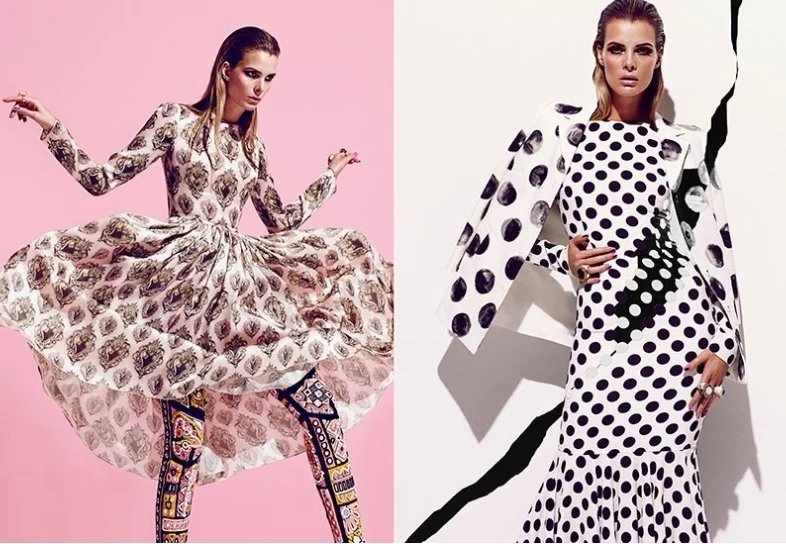
Stripes with florals? Polka dots with checks? Pattern mixing looks impossibly chic on other people and like a laundry accident when you try it. Learning to wear patterns without clashing isn’t about innate talent — it’s about a few simple rules that stylists use every day. Once you know them, mixing prints becomes one of the most fun parts of getting dressed.
The secret that unlocks everything: successful pattern mixing isn’t random. Every great mixed-print outfit follows at least two of the rules below. Learn them, and you’ll mix with confidence.
How to Wear Patterns Without Clashing: 5 Rules
1. Vary the scale
The number one rule: pair a large-scale print with a small-scale print. Big florals + tiny polka dots. Bold stripes + micro-check. When two prints are the same scale, they compete and blur; different scales create hierarchy — one leads, one supports. If you remember nothing else, remember this.
2. Share a colour
Two completely different prints work together if they share at least one colour. A floral top with blue in it + striped trousers with blue in them = cohesive. The shared colour is the visual thread that ties them together. This is why navy-and-white stripes mix with almost everything — navy appears in countless prints.
3. Treat stripes as a neutral
Classic stripes (especially navy/white, black/white, Breton) function as neutrals — they mix with florals, checks, polka dots and animal prints effortlessly. If you’re nervous about mixing, start here: striped top + printed bottom is the training-wheels combination that always works.
4. Balance with solids
Head-to-toe mixed prints is advanced. Start with two prints + one solid: printed top + printed skirt + solid shoes/bag, or printed dress + solid jacket + printed scarf. The solid piece gives the eye somewhere to rest and makes the mixing look intentional rather than chaotic.
5. Keep the vibe consistent
Prints have moods: romantic florals, graphic geometrics, preppy checks, boho paisleys. Mixing within a mood family is easier than across them — ditsy floral + gingham (both sweet/retro) works more naturally than ditsy floral + aggressive animal print. That said, deliberate contrast (feminine floral + tough camo) is a valid advanced move — just make it look deliberate through the other rules.
Foolproof Pattern Combinations to Try
- Breton stripes + floral midi skirt: the classic. Shared colours optional — stripes are neutral enough.
- Polka dots + stripes: vary the scale (small dots, wider stripes) and share a colour.
- Leopard print + stripes: leopard functions as a neutral (really). A leopard shoe or bag with a striped top is entry-level chic.
- Gingham + floral: keep one small-scale, share a colour, stay in the same mood family.
- Pin-striped blazer + printed blouse: the subtle office version — the stripe is quiet enough to let the blouse lead.
- Two florals: advanced — different scales, shared palette. Stunning when it works.
Colour confidence helps
Pattern mixing is easier when you understand your colours — our guides to colours for pale skin and colours that go with navy build the colour confidence that underpins print mixing. Shared-colour mixing only works if you can spot the shared colour.
Common Mistakes (and Fixes)
- Same scale, different prints: the most common clash. Fix: change one to a clearly larger or smaller scale.
- No shared colour: two great prints that ignore each other. Fix: add a shared-colour accessory (belt, shoe, bag) to bridge them.
- Too many prints: three+ competing prints is maximalism — fun, but hard. Fix: demote one print to an accessory.
- Clashing moods: corporate pinstripe + festival tie-dye reads as confused. Fix: commit to one mood per outfit.
- Ignoring the mirror: prints look different in motion and in photos. Check the full-length mirror, then commit.
The oversized blazer is a brilliant pattern-mixing tool — a solid blazer over mixed prints instantly makes them look deliberate. And for print inspiration, Vogue UK’s print style guides show how designers combine patterns each season.
Pattern Mixing at Work: The Professional Version
Pattern mixing in the office needs a quieter hand — the goal is “interesting and polished”, not “fashion week”. The work-safe approach:
- One bold + one subtle: a printed blouse with a pinstripe suit, or a subtle check trouser with a bolder printed top. One print leads, the other whispers.
- Keep it in the suit family: pinstripes, micro-checks, herringbone and subtle geometrics are all workplace-native patterns — mixing these reads as sophisticated rather than loud.
- Anchor with tailoring: a structured blazer over mixed prints instantly professionalises them. The blazer says “I meant this” in every office.
- Know your office: creative industries welcome bolder mixing; finance and law want restraint. Calibrate to the room — being the most interesting dresser is good, being the most distracting is not.
The foolproof work formula
Striped shirt + textured/patterned tie or scarf + solid suit = pattern mixing that no one would question. Or: printed blouse + solid blazer + solid trousers = one print, fully office-safe. Master these before attempting two-print office outfits. And remember the smart casual office guide — pattern mixing sits within that framework, not outside it.
Starting Small: Patterned Accessories
Not ready for head-to-toe mixing? Start with accessories — low commitment, high impact. The patterned scarf: the gateway — a printed scarf with a solid outfit teaches you which patterns you love without any risk. Tie it on your bag, wear it at your neck, use it as a belt — endlessly versatile. Patterned shoes: leopard flats, striped espadrilles — a pattern at your feet anchors an outfit without dominating it. The printed bag: a floral or geometric bag against solid clothes — the single-pattern statement. Mixed accessories: striped scarf + floral bag + solid outfit = pattern mixing with training wheels — each piece is small, so the combination can’t overwhelm. The principle: accessories let you experiment with patterns at £15–£30 instead of £80+ for garments. Find your pattern personality cheaply, then invest in the prints you reach for repeatedly. Everyone’s pattern journey starts with a scarf.
The practical takeaway: vary the scale, share a colour, treat stripes as neutral, anchor with solids, and keep moods consistent. Start with stripes + one print, check the mirror, and build from there. Pattern mixing is a skill, not a gift — practise it.