How to Do a French Manicure at Home: Salon Results
Learn how to do a French manicure at home with crisp white tips and a flawless finish — the tools, step-by-step technique and fixes for the most common mistakes.
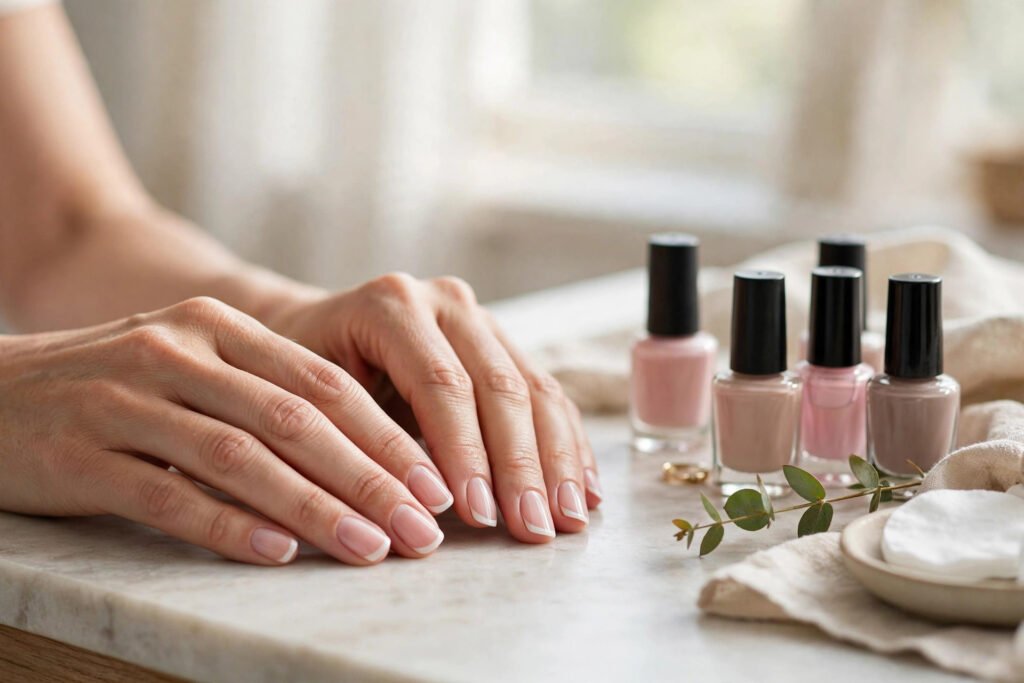
The French manicure is the little black dress of nails: a sheer pink or nude base with crisp white tips that looks polished on everyone, in every setting, in every decade. Salon versions are lovely and pricey; the DIY version is entirely achievable with a steady hand and the right technique. The secret professionals know is that a great French manicure is 80 per cent preparation — the white tip is just the flourish on top. Here is the full at-home method.
What you need
Keep it simple: nail file, cuticle pusher (or orange stick), sheer pink or nude polish, white tip polish, a base coat, a glossy top coat, and polish remover with a small angled brush or cotton buds for clean-up. French tip guides — the little curved stickers — are optional training wheels; freehand looks better once you practise, but guides guarantee symmetry while you learn. A quick-dry top coat is worth its weight in gold for beginners. Which? tests nail products alongside other beauty buys, and the British Association of Dermatologists’ nail health information covers keeping nails healthy under polish.
Preparation: the unglamorous 80 per cent
Remove old polish completely, then shape nails with a file in one direction (sawing back and forth weakens the tip). The classic French shape is squoval — square with softened corners — or a gentle oval; both show off the white tip beautifully. Soak fingertips in warm water for a few minutes, gently push back cuticles (never cut them — cuticles protect against infection), and buff the nail surface lightly to remove ridges. Wipe each nail with polish remover or alcohol to remove oils; polish adheres far better to a clean, dry nail. This prep is what separates a manicure that lasts ten days from one that chips by Tuesday.
Painting the perfect tip
Apply base coat to all nails and let it dry fully — impatience here causes dragging later. For the white tip, you have two approaches. With guides: place the sticker just below where you want the smile line, paint the tip white in two thin coats, and peel the guide off while the second coat is still slightly tacky. Freehand: rest your painting hand on the table for stability, and use the brush’s edge to sweep a curved line across the tip, or paint the whole tip and neaten the smile line with remover on an angled brush. Pros almost always neaten with remover — the clean-up step is not cheating, it is the technique.
Keep the white band proportional: roughly a quarter of the nail on short nails, a touch more on long ones. A too-thick white tip is the classic DIY giveaway.
The sheer base and the glossy finish
Once tips are dry, apply one to two thin coats of sheer pink or nude over the whole nail, extending slightly over the white to blend the smile line softly. This is what makes it look expensive rather than stark. Finish with a generous glossy top coat, wrapping it over the free edge of the nail — “capping the edge” is the professional trick that prevents tip chipping. Reapply top coat every two to three days and your manicure can last ten days or more.
Troubleshooting common problems
Bubbles mean coats are too thick or the polish is old — thin coats and fresh-ish polish fix it. Streaky white tips usually mean one thick coat instead of two thin ones. Smudging means you rushed drying; use quick-dry drops or a cool hairdryer blast. If one nail chips, do not redo the whole hand: lightly file the chip, dab white on the tip, sheer over the top, and re-seal with top coat. And if freehand tips defeat you after several attempts, there is no shame in guides or in a French-tip nail stamp — the finished look is what matters.
Nail care is part of a bigger grooming picture, and small upgrades compound — much like choosing jewellery that flatters your colouring, a neat French manicure quietly elevates everything you wear with it.
Making it last
Wear gloves for washing up and cleaning — water and detergents are the top killers of manicures. Moisturise cuticles daily with oil; healthy cuticles frame the manicure and prevent lifting. Avoid using nails as tools (no prising open tins). With these habits plus regular top-coat refreshes, a home French manicure genuinely rivals a salon one at a fraction of the price. For inspiration on pulling the whole look together, wedding-guest dressing guides show how classic nails complete a polished outfit.
Modern twists on the classic French
Once you have mastered the classic, the French manicure is a template for endless variations. The micro-French uses an ultra-thin tip line — chic on short nails and more forgiving to paint freehand. Coloured tips swap white for black, red, pastels or metallics; a black micro-French is strikingly modern. The reverse French (or half-moon) places the colour at the cuticle instead of the tip. Ombre French fades the white into the pink with a sponge for a soft gradient with no smile line to perfect — ideal if your freehand linework is still developing.
Seasonal twists keep it fresh: deep burgundy tips for autumn, icy blue for winter, neon for summer festivals. Chrome powder over the tip adds a glazed, expensive-looking finish for pennies. And the “invisible” French — sheer nude base with a tip just one shade deeper — reads as impossibly neat natural nails, perfect for conservative workplaces. The technique for all of these is identical to the classic; only the colours change. Master one French and you have mastered them all, which makes it the highest-value nail skill a beginner can learn.
Conclusion
A beautiful French manicure at home is preparation, thin coats, a neat smile line (cleaned up with remover like the pros do), and a well-sealed top coat. Practise on a quiet evening, keep your hand steady on the table, and remember that even professionals neaten as they go. Your nails will look like you paid £40 — because you nearly did, in skill.
Frequently Asked Questions
How do I get a straight smile line on a French manicure?
Use tip guides while learning, or paint freehand and neaten the line with polish remover on a small angled brush. Pros rely on the clean-up step more than a perfect first stroke.
Why does my French manicure chip so quickly?
Usually skipped prep (oils left on the nail), thick coats, or no top-coat seal over the free edge. Thin coats, full drying time between layers, and capping the edge extend wear to ten days.
Can I do a French manicure on short nails?
Absolutely — keep the white tip narrow (about a quarter of the nail) and the look is elegant on short nails. Very short nails suit a softer, thinner smile line.
What is the best white polish for French tips?
A highly pigmented, quick-drying white applied in two thin coats. Stark white suits most; a soft off-white looks more natural on some skin tones.
How long should a DIY French manicure last?
Seven to ten days with good prep, thin coats, sealed edges and gloves for housework. Refresh the top coat every two to three days to maximise wear.