
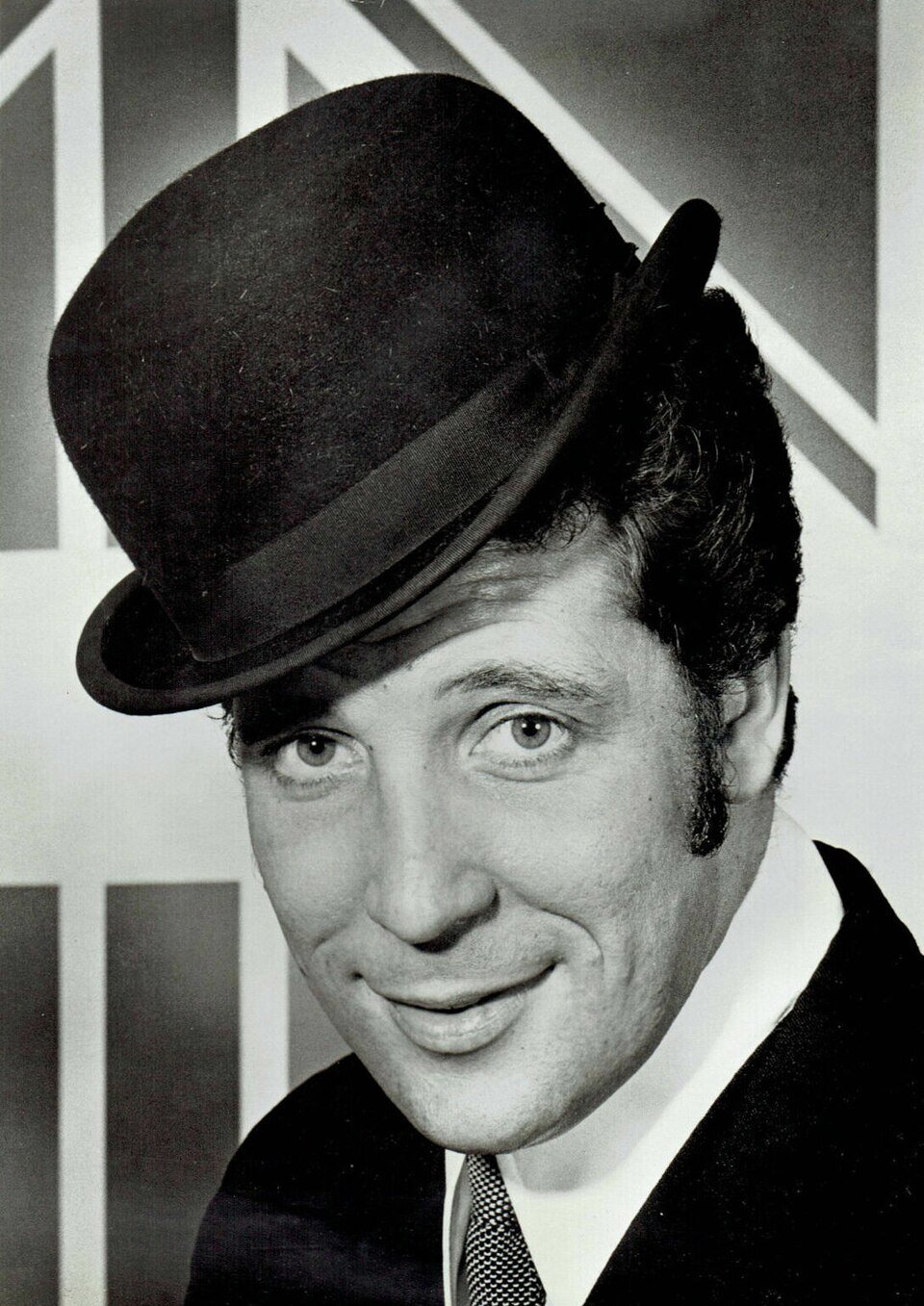
What Is Tom Jones’ Net Worth? Age, Wife, Family and Career
Tom’s $300 million Fortune Starts in Treforest
Tom Jones is a Welsh singer whose recording career has lasted more than six decades, from the chart breakthrough of It’s Not Unusual in 1965 to a world tour still running in his mid-eighties. Celebrity Net Worth puts Tom Jones’s net worth at $300 million, and no competing total from Forbes was found, while no individual Sunday Times Rich List figure for him is published. A lower total of $250 million circulates in round-ups drawn from sources outside the permitted set; it is unattributed in any authoritative sense and is noted here only as circulation, not adopted as the figure.
His wife was Melinda “Linda” Jones, née Trenchard, whom he married in 1957 when both were sixteen. Linda died on 10 April 2016, and Jones is not currently married and has not remarried. He has two sons, more than 100 million records sold worldwide, and a knighthood awarded for services to music. At 86, he remains an active touring performer, which makes his story as much about endurance as about the hits themselves.
The Facts Behind the $300 million Fortune: Tom
| The Facts Behind the $300 million Fortune: Tom | Details |
|---|---|
| Born | 7 June 1940, Treforest, Pontypridd, Wales |
| Age | 86 |
| Height | 5 ft 10 in (1.78 m) |
| Weight | No reliable published figure |
| Wife | Late wife Melinda “Linda” Jones (née Trenchard), married 1957, died 10 April 2016; not currently married |
| Children | Two sons: Mark Woodward and Jonathan Berkery |
| Parents | Thomas Woodward and Freda Woodward (née Jones) |
| Net Worth | $300 million (Celebrity Net Worth) |
| Nationality | Welsh |
| @realsirtomjones |
The Breakthrough and Everything After It
1964–1965: The Breakthrough
His first release for Decca, Chills and Fever, appeared in 1964 and made little impression. The second, It’s Not Unusual, released in early 1965, transformed everything. Written by Les Reed and Gordon Mills and originally pitched elsewhere, the song reached number one in the United Kingdom and the top ten in the United States, and its brassy arrangement and full-throated delivery became his signature. The debut album Along Came Jones followed in 1965, gathering the early material and establishing him as far more than a one-record attraction.
1966–1969: Green, Green Grass and Delilah
The late 1960s produced the run of songs by which many listeners still define him. What’s New Pussycat?, written by Burt Bacharach and Hal David, gave him a transatlantic hit in 1965, and Green, Green Grass of Home in 1966 — a country standard he turned into a homesick valleys lament — spent weeks at number one in Britain and became the best-selling release of his career to that point. The album Green, Green Grass of Home followed in 1967. Delilah in 1968, all melodrama and betrayal, reached number two in Britain and became a permanent fixture of his live set, while Help Yourself the same year confirmed his command of a big, romantic ballad. The albums Delilah (1968) and Help Yourself (1968) consolidated a catalogue built on range: country, pop, soul and show songs all sat comfortably in the same set.
1970–1979: The Vegas Years
She’s a Lady, written by Paul Anka, gave him his biggest American hit in 1971, reaching number two. Through the 1970s his centre of gravity shifted towards Las Vegas residencies and extensive American touring, where the live show — athletic, perspiring, unmistakably physical — became the product as much as any new release. Chart positions at home softened, yet the earning power of the live circuit grew, a pattern worth remembering when considering where his wealth was actually built. Albums continued steadily, and the voice itself showed no sign of the decline that caught many of his generation.
1988–1999: The Comeback and Reload
A late-1980s revival began with A Boy from Nowhere in 1987 and a cover of Kiss, recorded with the Art of Noise in 1988, which returned him to the top five in Britain and introduced him to a younger audience entirely unbothered by the cabaret years. If I Only Knew followed in 1994. The decade closed with Reload in 1999, an album of duets and covers recorded with contemporary acts, which reached number one in the United Kingdom and sold in the millions. Its best-known track, Sex Bomb, recorded with Mousse T., became a European hit and a permanent live favourite, and the album’s success repositioned him as a heritage artist whom younger performers actively wanted alongside them.
2000–2012: Roots and Reflection
Mr Jones followed in 2002, and 24 Hours in 2008 reunited him with the writers behind some of his biggest hits. The most striking turn came with Praise & Blame in 2010, a stripped-back collection of gospel and blues material recorded with minimal production. Critics who had filed him as an entertainer rather than an artist revised their view, and the album reached the upper end of the British chart. Spirit in the Room in 2012 continued the roots direction with songs by Leonard Cohen, Paul McCartney and others, delivered sparely and without vocal showmanship for its own sake.
2015–2026: Surrounded by Time and Still Touring
Long Lost Suitcase arrived in 2015, and Surrounded by Time in 2021 debuted at number one in the United Kingdom, making him, at 80, the oldest male artist to top the British albums chart with a new release. The record reframed standards and unexpected choices in his own weathered register. Touring never stopped being the backbone: his Come Gather Round world tour ran through autumn 2026, with twenty concerts in the United States completed by late October, and the Los Angeles, San Diego and Highland dates postponed on doctors’ advice after a bout of flu and rescheduled to 3, 4 and 6 November 2026, as he explained in his own statement to followers. For readers following how veteran Welsh performers have sustained comparable late careers, our profile of a fellow Welsh singing star’s net worth and family life sets his longevity in a wider context.
Tom’s Earnings, From The Breakthrough Onwards
Celebrity Net Worth’s figure of $300 million rests on a career with three distinct earning phases. The first was the 1960s hit run, when record sales of what would eventually pass 100 million worldwide generated substantial royalties, though on the less generous contracts typical of the era. The second, and probably the most lucrative per year, was the long Las Vegas and American touring period, when a guaranteed live draw could command fees that chart positions alone would never have justified. The third was the comeback era from Kiss onwards, when Reload and the roots albums restored British sales while touring income continued uninterrupted.
Two cautions belong with the headline figure. First, the $250 million total that appears in some round-ups comes from sources with no published methodology and is not adopted here; the disagreement is recorded so readers can see the range in circulation rather than a false precision. Second, record sales are a career measure, not a bank balance: 100 million records sold does not mean 100 million of anything in an account, and the $300 million attribution to Celebrity Net Worth should be read as an estimate built from earnings, property and longevity, not an audited statement. No Forbes total and no individual Sunday Times Rich List figure exists to set against it.
What is not in dispute is the durability of the income. Few performers earn headline touring fees in their ninth decade. A knighthood in the 2006 New Year Honours recognised services to music, and the commercial fact underneath the honour is simple: audiences have paid to hear the voice, in person, across seven different decades, and that consistency, more than any one hit, is what a $300 million estimate is really measuring.
Young Tom, Treforest and Big Dreams
Thomas John Woodward was born on 7 June 1940 in Treforest, Pontypridd, in the South Wales valleys. His father, Thomas Woodward, was a coal miner, and his mother, Freda, née Jones, kept the family home in a terraced street shaped entirely by the pits and the chapels around it. The stage surname he later adopted came from his mother’s maiden name, a small decision that quietly acknowledged where the musical encouragement in the family had come from.
Singing was present from childhood. He sang in the school choir and at family gatherings, and by his own account he could hold a tune before he had any thought of earning a living from it. At twelve he was diagnosed with tuberculosis and spent around two years largely confined to bed and to the home, listening to the radio and absorbing the American rhythm and blues, gospel and country voices that would shape his own delivery. That enforced stillness matters in any honest biography, because the voice that later filled arenas was trained, in effect, in a bedroom in Treforest.
He left school at sixteen without qualifications and worked in a glove factory and on building sites, singing in pubs and working men’s clubs in the evenings with local beat groups. In 1957, still sixteen, he married Linda Trenchard, and their son Mark was born weeks later. Providing for a young family on factory wages while chasing club bookings gave his early career a practical urgency that contemporaries from more comfortable backgrounds rarely had to feel.
By the early 1960s he was fronting Tommy Scott and the Senators, a well-regarded valleys band whose live reputation ran ahead of its recording luck. A demo reached London, manager Gordon Mills took him on in 1964, and the name Tom Jones was settled on. The apprenticeship had been long, local and unglamorous, and it left him with the stagecraft that would carry him when the records finally connected.
Two sons at Home: Tom’s Family
The central relationship of his life began in Pontypridd long before fame. He and Linda Trenchard married on 2 March 1957, both aged sixteen, and remained together for fifty-nine years. Linda, who disliked the public side of his career and guarded the family’s privacy fiercely, died of lung cancer on 10 April 2016 at Cedars-Sinai in Los Angeles. Jones has spoken since about the depth of that loss and about Linda’s encouragement, near the end of her life, that he should keep singing. To be plain, because older profiles are often carelessly worded: Linda was his wife, she died in 2016, and he is not currently married.
His elder son, Mark Woodward, born in April 1957 to Tom and Linda, has managed his father’s career for most of his adult life — an unusual arrangement that kept business inside the family and, by most accounts, protected Jones from some of the exploitative deals that damaged contemporaries. His second son, Jonathan Berkery, was born in 1988; his mother is Katherine Berkery. A court ruled in 1989, following DNA testing, that Jones was Jonathan’s father. Jones disputed the finding for many years before accepting it in 2008. There is no relationship between father and second son, a fact Jones himself has acknowledged publicly, and it remains the most painful entry in the family record.
His parents both died long before the late-career revival: Thomas Woodward in 1981 and Freda in 2003. After Linda’s death, Jones sold the Los Angeles property the couple had shared and settled in London, describing the move in terms of memories rather than bricks — the American home held too much of Linda for him to stay. The family story, taken whole, is one of valleys roots, a teenage marriage that lasted a lifetime, and a son managing the career his parents began in a Pontypridd pub circuit.
Where Tom Is Now, After The Breakthrough
Jones stands, at 86, in a position almost no popular singer reaches: still touring internationally, still releasing chart-topping albums, and still defined by a voice that remains recognisably the instrument of 1965. The autumn 2026 tour dates, and the brief flu postponements handled openly with rescheduled dates within days, showed a working performer managing a working schedule, not a farewell pageant.
The questions that surround him now are about legacy rather than livelihood. The catalogue is secure, the family arrangement under Mark’s management is stable, and the net worth attributed by Celebrity Net Worth reflects a lifetime of converting live demand into earnings. Whether he records again matters less than the fact that, sixty-one years after It’s Not Unusual, Tom Jones is still, on his own terms, at work.