How Rich Is Sinead O’Connor, Really? How the Fortune Grew: Career, Family and Life
The Lion and the Cobra, Nothing Compares and the Price of Protest
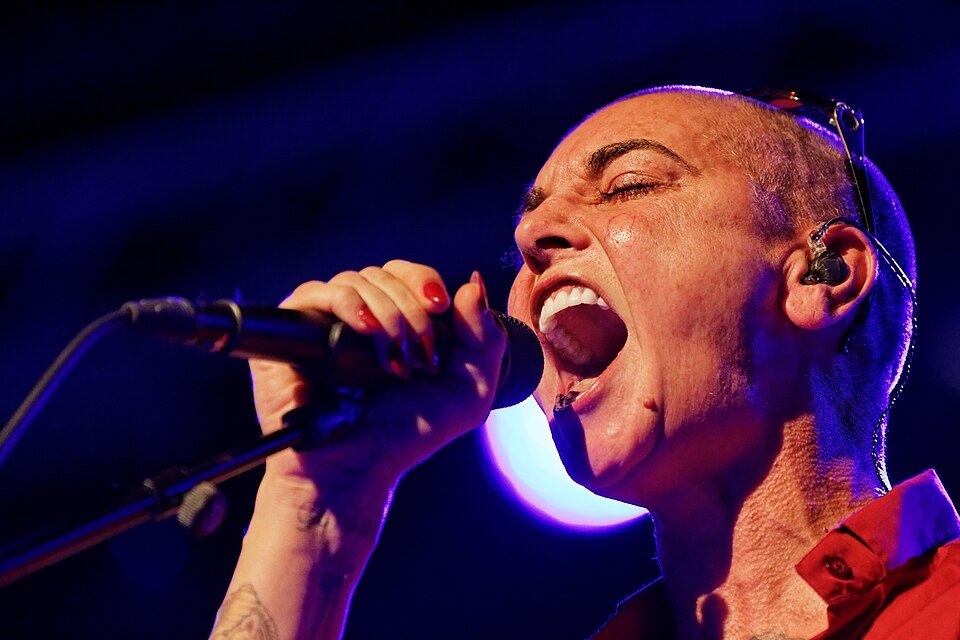
Sinead O’Connor was the Irish singer whose voice, and whose refusal to soften anything she believed, made her one of the most recognisable and contested figures in popular music. Her recording of Nothing Compares 2 U in 1990 remains one of the defining singles of its era, and the albums around it established a body of work that critics continue to rank among the finest of her generation. She died in London on 26 July 2023, aged 56, and the London coroner later recorded that she died of natural causes.
Celebrity Net Worth puts Sinead O’Connor’s net worth at $1.5 million at the time of her death. That modest figure, startling beside the scale of her fame, is corroborated by the one hard number in the public record: Irish probate reporting in January 2025 showed an estate of £1.7 million gross and £1.4 million net after debts, legal costs and funeral expenses, left to her surviving children. No Forbes or Sunday Times Rich List total exists for her, and none is invented here.
Born in Dublin, Third of Five, to an Engineer Turned Barrister
Sinéad Marie Bernadette O’Connor was born on 8 December 1966 in Dublin, Ireland, the third of five in her family. Her father, John Oliver “Seán” O’Connor, was a structural engineer who later retrained as a barrister; her mother, Johanna Marie O’Connor, née O’Grady, died in 1985, when her daughter was eighteen. Her parents’ marriage had ended during her teenage years, and she wrote and spoke throughout her life, with unusual directness, about a difficult upbringing and the effect it had on her. Those experiences became the emotional core of much of her songwriting.
Music offered the way out. She sang at family gatherings, was placed for a time in a Magdalene institution after episodes of shoplifting and truancy — an experience she later described in searing terms — and eventually found her way to a boarding school where a teacher encouraged her singing and helped her record a demonstration tape. By her mid-teens she was performing with local bands in Dublin, and a spell with the group Ton Ton Macoute brought her to the attention of record labels in London.
She signed to Ensign Records and was paired, briefly and unhappily, with producers whose plans for her she rejected outright — an early sign of the independence that would define her public life. She insisted on producing her debut album herself while still in her teens and pregnant with her first child, a decision that would have ended many careers before they began and instead produced one of the most acclaimed debuts of the decade. The summary of her life and figures is gathered in the full Sinead O’Connor net worth profile for readers who want the essentials in one place.
The Gap Between Fame and Fortune, Explained Plainly
The gap between O’Connor’s fame and her fortune is the central financial fact of her life, and it has straightforward causes. Her biggest song was written by somebody else: Nothing Compares 2 U was composed by Prince, so the songwriting royalties from one of the most played recordings of the 1990s were never hers. She earned as a performer from record sales and touring, but her commercial peak was brief, her American career was damaged at its height by the events of 1992, and she repeatedly walked away from lucrative arrangements that required her to be something she was not.
Set against that, the two attributed figures agree with each other unusually well. Celebrity Net Worth gives $1.5 million at the time of her death. The Irish probate record reported in January 2025 put her estate at £1.7 million gross and £1.4 million net after debts, legal costs and funeral expenses, left to her surviving children. At the exchange rates of the period, those totals describe the same modest estate from two directions, and together they are far more persuasive than the larger numbers that circulate without any source behind them.
Her will, as reported in the same probate coverage, directed that her unreleased recordings be issued after her death to, in her words, “milk it for what it’s worth” — a characteristically unsentimental instruction from an artist who understood the business’s economics perfectly well and wanted her children to benefit from whatever value remained in the vaults. Whether those recordings add materially to the estate will only be known as they appear.
Four Marriages, From John Reynolds Onwards
O’Connor married four times. She married John Reynolds, her drummer and producer, in 1989, and they divorced in 1991; their son, Jake Reynolds, was born in June 1987. She married the journalist Nick Sommerlad in 2001, and they divorced in 2003. She married Steve Cooney, a longtime collaborator, in July 2010; they separated in March 2011 and divorced the same year. She married Barry Herridge in December 2011 in Las Vegas; they separated within weeks, reunited in January 2012, and she stated in February 2014 that they had not divorced. No divorce from Herridge was reliably reported before her death, and the table in this profile records the position exactly as it stands: separated, with no divorce reliably reported.
Her four children were born across two decades. Jake Reynolds, the eldest, arrived in 1987. Roisin Waters was born in March 1996, her father the journalist John Waters; a custody dispute over Roisin in the late 1990s was fought in public and clearly cost her mother dearly. Shane Lunny was born in March 2004, his father the musician Dónal Lunny; Shane died in January 2022, aged 17, a loss from which those close to her said she never recovered. Her youngest, Yeshua Bonadio, was born in December 2006, his father Frank Bonadio.
Religion ran through her life as a public thread. Raised a Catholic, she was ordained in 1999 by Bishop Michael Cox of the Irish Orthodox Catholic and Apostolic Church, an independent church not recognised by Rome, taking the name Mother Bernadette Mary. In August 2018 she asked to be excommunicated by the Catholic Church, and in October 2018, as reported by BBC News on 26 October that year, she announced her conversion to Islam, taking the name Shuhada’ Sadaqat while continuing to perform as Sinéad O’Connor. She was buried in Bray, County Wicklow, after a funeral that included a Muslim burial service led by Shaykh Umar Al-Qadri, in the town where she had lived for fifteen years in a property overlooking the sea.
Her final home was a flat in south London, where she had moved in the period before her death and where she died on 26 July 2023. The London coroner recorded natural causes in January 2024, and her death certificate, reported in July 2024, gave an exacerbation of chronic obstructive pulmonary disease and bronchial asthma, with a low-grade lower respiratory tract infection. No further detail is offered here, because none is needed: the official wording is the record, and it is sufficient.
Dublin Birth, Four Marriages and $1.5 Million at a Glance
| Dublin Birth, Four Marriages and $1.5 Million at a Glance | Details |
|---|---|
| Born | 8 December 1966, Dublin, Ireland |
| Age | 56 (at her death on 26 July 2023) |
| Height | 5 ft 4 in (1.63 m) |
| Weight | No reliable published figure |
| Partner | Barry Herridge — separated, with no divorce reliably reported before her death |
| Children | Four: Jake Reynolds, Roisin Waters, Shane Lunny and Yeshua Bonadio |
| Parents | John Oliver “Seán” O’Connor and Johanna Marie O’Connor, née O’Grady |
| Nationality | Irish |
| Religion | Raised Catholic; converted to Islam in 2018, taking the name Shuhada’ Sadaqat |
| Net Worth | $1.5 million at her death (Celebrity Net Worth) |
The Lion and the Cobra, the Summit and Later Albums
1987–1989: The Lion and the Cobra Announces a Voice
The Lion and the Cobra, released in 1987, announced an extraordinary talent. Troy, its best-known song, built from a whisper to a howl over nearly seven minutes, while Mandinka gave her a first taste of chart success. The album earned a Grammy nomination and strong reviews on both sides of the Atlantic, and her appearance — shaven head, intense and unsmiling — became instantly recognisable. She had refused, from the very start, to present herself in the way the industry expected of a young female singer, and the refusal itself became part of the story.
1990–1993: Nothing Compares 2 U and the Summit
Her second album, I Do Not Want What I Haven’t Got, released in 1990, carried her to the very top of the business. Nothing Compares 2 U, written by Prince and delivered by O’Connor in a single, devastating performance, reached number one in more than a dozen countries, and its close-up video, ending in real tears, became one of the most famous music videos ever made. The album also included The Emperor’s New Clothes and Three Babies, sold millions of copies worldwide and won the Grammy Award for Best Alternative Music Performance, an award she declined in protest at the commercialisation of the ceremony.
The years that followed brought the controversies for which she became as famous as for her singing. In October 1992, appearing on American late-night television, she tore up a photograph of Pope John Paul II in protest at abuse within the Catholic Church, an act that provoked furious condemnation at the time and that many later commentators reassessed as Irish revelations about institutional abuse emerged. Her third album, Am I Not Your Girl?, a collection of standards released the same year, suffered commercially in the backlash.
1994–2004: Universal Mother and a Quieter Path
Universal Mother, released in 1994, returned to original material, including Fire on Babylon and a cover of Nirvana’s All Apologies, and was received warmly by critics even as her commercial momentum in the United States faded. The EP Gospel Oak followed in 1997. Faith and Courage, her fifth studio album, arrived in 2000 with contributions from Wyclef Jean and Dave Stewart and the single No Man’s Woman, and in 2002 she explored traditional material on Sean-Nós Nua. She announced her retirement from the mainstream music business in 2003, a retirement that, like several of her announcements, proved negotiable.
2005–2023: Later Albums, Memoir and Final Performances
She returned with the double album Theology in 2007, followed by How About I Be Me (and You Be You)? in 2012 and I’m Not Bossy, I’m the Boss in 2014, whose single Take Me to Church shared only a title with another famous song of the period. Her memoir, Rememberings, published in 2021, was widely praised for its honesty and wit and introduced her story to a new generation of readers. She continued to perform selectively, and work on a further album was under way at the time of her death; her will later directed that her unreleased recordings be issued, in her own quoted words, to “milk it for what it’s worth”.
Her Standing Has Risen Steadily Since Her Death
O’Connor’s standing has risen steadily since her death, in the way that often happens when a difficult artist can no longer interrupt the reassessment. The protest that ended her American career in 1992 is now widely discussed in the context of the Irish abuse inquiries that followed, and she is frequently described, in obituaries and retrospectives alike, as a woman who told the truth a decade before her country was ready to hear it. The Guardian, BBC News and The New York Times all marked her death with substantial obituaries, and her memoir continues to find readers.
What endures most, though, is the singing. Nothing Compares 2 U has settled into the permanent repertoire of popular music, and the early albums are studied by younger singers for their control and emotional directness. Her estate, at $1.5 million by Celebrity Net Worth’s estimate and £1.4 million net on the probate record, was small beside her influence — a mismatch she would probably have regarded, on the evidence of everything she said about money and fame, with complete indifference.