What Vaccinations Does Your Puppy Need in the UK
what vaccinations does your puppy need in the UK: the standard schedule, the socialisation dilemma, costs, aftercare advice and common myths worth burying.
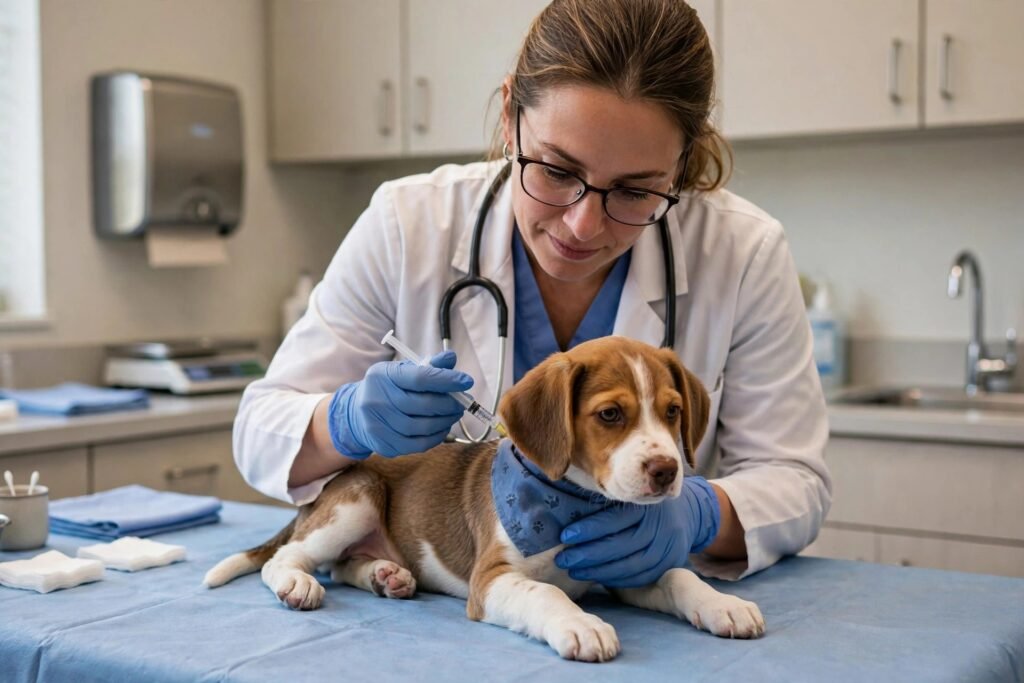
Your puppy’s first vaccinations are among the most important health decisions you’ll make — and one of the most confusing. Vets recommend different schedules, breeders say different things, the internet says everything, and meanwhile your unvaccinated puppy is desperate to meet the world. Get it wrong and you risk parvovirus, distemper or leptospirosis — diseases that kill unvaccinated puppies. Here’s the clear, vet-aligned guide to what your puppy needs and when.
Why Puppy Vaccinations Can’t Wait
Puppies are born with maternal antibodies from their mother’s milk, which protect them initially — but these fade between 6 and 16 weeks, at unpredictable rates per puppy. This creates a dangerous “immunity gap”: maternal protection gone, but the puppy’s own immune system not yet trained. Vaccinations bridge this gap by teaching the immune system to recognise diseases before it meets them for real. The diseases are not theoretical — parvovirus outbreaks occur regularly in Britain, and unvaccinated puppies die from it.
The Standard UK Vaccination Schedule
British veterinary guidance (aligned with WSAVA international guidelines) recommends:
First vaccination: 6–8 weeks old. Covers distemper, parvovirus, hepatitis (adenovirus) and leptospirosis — the “core” diseases. Many breeders arrange this before puppies leave at 8 weeks; confirm with vaccination records, not just verbal assurance.
Second vaccination: 10–12 weeks old (2–4 weeks after the first). Boosts the core diseases. This is the critical one — immunity isn’t considered reliable until 1–2 weeks after this second dose.
Third vaccination: 14–16 weeks (for high-risk situations). Some vets recommend a third dose, particularly for parvovirus in high-risk areas or breeds with prolonged maternal antibody interference. Discuss with your vet based on local disease prevalence.
Annual boosters thereafter. Core vaccines (distemper, parvovirus, hepatitis) typically move to every 3 years after the first annual booster; leptospirosis requires annual boosting. Your vet will set the schedule — PDSA’s vaccination guidance provides an excellent owner-friendly overview of what each vaccine covers.
The Socialisation Dilemma: The Hardest Part
Here’s the genuine tension: the critical socialisation window (3–14 weeks) overlaps exactly with incomplete vaccination. Puppies kept isolated until fully vaccinated can develop lifelong fear and behaviour problems — statistically a bigger risk to most puppies’ welfare than the diseases, in low-risk areas. The veterinary consensus: socialise carefully before full vaccination, don’t isolate.
Safe socialisation before the second jab: carry your puppy in public (they experience the world safely from your arms), visit friends with healthy vaccinated dogs, attend vet-run puppy parties (designed for partially vaccinated puppies), invite visitors to your home, and expose them to sounds, surfaces, vehicles and handling. Avoid: dog parks, unknown dogs, areas with heavy dog traffic, and ground where unvaccinated dogs may have been. The RSPCA’s puppy socialisation guidance details how to balance disease risk against behavioural needs.
What Each Vaccine Protects Against
Canine parvovirus: highly contagious, survives in the environment for months, causes severe vomiting/diarrhoea/dehydration. Kills unvaccinated puppies. The single most important vaccine.
Canine distemper: attacks respiratory, gastrointestinal and nervous systems. Often fatal; survivors may have permanent neurological damage. Rare in vaccinated populations precisely because vaccination works.
Infectious canine hepatitis (adenovirus): liver disease, potentially fatal. Included in all core vaccines.
Leptospirosis: bacterial disease from rat urine in water and soil — a genuine UK risk, transmissible to humans. Requires annual boosters. If your puppy swims or walks near waterways, this is essential.
Non-core (discuss with your vet): kennel cough (bordetella/parainfluenza) — recommended if your dog will board, attend daycare or mix with many dogs; rabies — required for pet travel abroad under the pet travel scheme.
Costs: What to Expect
A primary course (two vaccinations) typically costs £60–£100 at most UK vets; annual boosters £40–£60. Prices vary regionally — London and the South East cost more. Some charities offer reduced-cost vaccination for owners on benefits — Blue Cross and PDSA provide means-tested veterinary services. Pet insurance should be in place before vaccinations — not because vaccines are claimable, but because everything after them might be.
After Vaccination: Practical Care
Mild side effects are normal: slight lethargy, reduced appetite or a small lump at the injection site for 24–48 hours. These indicate the immune system responding — a good sign. Contact your vet if: swelling is large or growing, your puppy vomits repeatedly, has difficulty breathing, or seems significantly unwell. Serious reactions are rare (well under 1 in 10,000) but require prompt attention.
Keep your puppy relatively quiet for 24 hours post-vaccination, avoid bathing for a few days, and keep the vaccination record safe — boarding kennels, daycares, trainers and pet travel all require proof. Photograph the certificate as backup.
Vaccination Myths Worth Burying
“Indoor puppies don’t need vaccines.” Debunked above — parvovirus travels on shoes, and “indoor” puppies still visit vets. “One jab is enough.” The primary course needs two (sometimes three) doses because maternal antibodies interfere unpredictably with the first — a single dose leaves an unknown proportion of puppies unprotected. “Vaccines cause more harm than disease.” Serious adverse reactions occur in well under 1 in 10,000 doses; parvovirus kills a substantial proportion of unvaccinated puppies that contract it. The risk comparison isn’t close. “Natural immunity is better.” Natural immunity requires surviving the disease — for parvovirus and distemper, many puppies don’t. Vaccination provides immunity without the Russian roulette. “My breeder said they’re done.” Verify with the vaccination card (signed, dated, with batch stickers) — verbal assurances aren’t records, and the second dose timing is critical. Trust, but verify: your vet can titre-test if there’s genuine doubt about what’s been given.
The Bottom Line
Vaccinate at 6–8 weeks and 10–12 weeks, boost annually as your vet advises, and — critically — socialise carefully during the immunity gap rather than isolating your puppy. The diseases are real and deadly, but so are the behavioural consequences of a puppyhood spent indoors. Balanced, vet-guided, prompt vaccination is one of the simplest high-impact things you’ll do as a dog owner. For the adventures that follow once immunity is established, our guide to dog-friendly holidays in the UK opens up a world of exploring together. And keeping your home clean with a new puppy is easier with the right tools — see whether a robot vacuum is worth it for pet homes.
Frequently Asked Questions
Can my puppy go outside before vaccinations are complete?
Your garden (if secure and not visited by unknown dogs) is fine from day one. Public ground is the risk — wait until 1–2 weeks after the second vaccination for walks in public areas. In the meantime, carry your puppy out to experience the world safely.
What if I don’t know my rescue puppy’s vaccination history?
Vets treat unknown history as unvaccinated and restart the primary course — there’s no harm in re-vaccinating, and the risk of assuming protection that isn’t there is serious. Rescue centres usually vaccinate before rehoming; confirm with paperwork.
Are there risks to over-vaccinating?
Modern protocols already minimise this — core vaccines moved to triennial boosting precisely to avoid unnecessary vaccination. Titre testing (blood tests measuring immunity) is available if you want to verify protection before boosting, though it’s more expensive than the booster itself.
Do indoor dogs need vaccinations?
Yes. Parvovirus travels on shoes and clothing; leptospirosis is in the environment; and “indoor” dogs still visit vets, groomers and boarding. The diseases don’t check your lifestyle before infecting. Core vaccination is recommended for all dogs regardless of lifestyle — the cost is small and the protection is essential.