How to Check Your Tyre Pressure and Why It Matters
Two minutes, huge payoff. How to check your tyre pressure and why it matters — safety, fuel savings, the correct cold-check method and reading tyre wear.
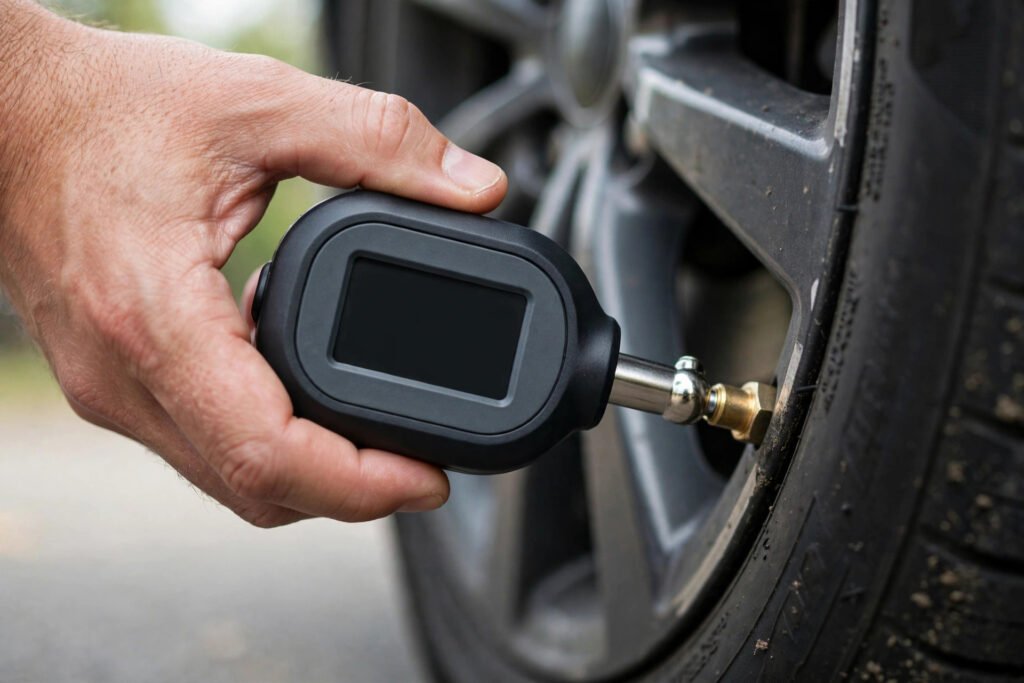
Tyre pressure is the most neglected two-minute job in motoring — and one of the most consequential. Under-inflated tyres waste fuel, wear out faster, handle worse, and in extreme cases overheat and blow out at speed. Over-inflated tyres grip less and ride harshly. Yet surveys consistently find most drivers can’t remember the last time they checked. Here’s why it matters, how to check correctly, and how to make it a habit.
Why Tyre Pressure Matters So Much
Safety: tyres are your only contact with the road — four palm-sized patches holding two tonnes at 70mph. Under-inflation increases braking distances, worsens handling (especially in the wet), and causes heat build-up that can trigger blowouts. The difference between correct and 20% under-inflated is measurable in emergency stopping tests.
Money: just 10% under-inflation increases fuel consumption by ~2% and accelerates edge wear, shortening tyre life by thousands of miles. Across a year, neglected pressures cost the average driver £50–£100 in fuel and premature replacement — for want of a monthly two-minute check.
Legality: while pressure itself isn’t directly ticketed, the consequences are — worn tyres below 1.6mm tread earn £2,500 fines per tyre plus points. Under-inflation gets you to illegal tread far faster. The GOV.UK tyre safety guidance sets out the legal requirements.
Comfort and handling: correct pressures give the ride and grip the manufacturer designed. Too high and every pothole crashes through; too low and the car feels vague and wallowy. It’s free performance.
Finding Your Correct Pressures
The right pressure is specific to your car — not the tyre’s sidewall maximum (that’s the tyre’s limit, not your car’s setting). Find yours:
Driver’s door jamb sticker — the most reliable source, usually inside the driver’s door frame or fuel flap. It lists front/rear pressures, often with separate figures for normal and fully-loaded conditions.
Owner’s manual — same data, plus guidance on when to use loaded pressures (holiday with full boot and passengers? Use the higher figure).
Manufacturer websites — most have pressure lookup tools by registration.
Typical values: 30–35 PSI (2.1–2.4 bar) for most cars, but yours is what matters — a heavy SUV and a light hatchback differ enormously. Note that TPMS (tyre pressure monitoring systems, mandatory on new cars since 2014) warn of significant drops — usually 25% — long after efficiency and wear have suffered. TPMS is a last resort, not a maintenance substitute. If your TPMS light is on, our car diagnostics guide helps you interpret what the car is telling you.
How to Check: The Two-Minute Method
1. Check cold. Pressures rise as tyres warm — “cold” means driven less than ~2 miles or parked 3+ hours. Morning before driving is ideal. Checking after a motorway run gives readings ~4–6 PSI high.
2. Unscrew the valve cap (keep it safe — they’re tiny escape artists) and press your gauge firmly onto the valve. A brief hiss is normal; a sustained leak means poor seal — reseat and retry.
3. Read and compare to your door-sticker figure. Digital gauges (£8–£15) are accurate and readable; pencil gauges are cheap but fiddly; petrol station forecourt gauges are notoriously unreliable — fine for topping up, not for measuring.
4. Inflate or deflate to spec. Most petrol stations have air lines (often 50p or free — supermarkets are usually free). Add air in short bursts, rechecking as you go — overshooting then bleeding back down is normal. Replace valve caps.
5. Don’t forget the spare (if you have one) — space-savers need ~60 PSI and are useless flat. Check it quarterly; discovering a flat spare at midnight in the rain is a special misery.
Frequency: monthly minimum, plus before any long journey and with significant temperature drops (pressure falls ~1 PSI per 5°C — autumn’s first cold snap silently deflates the nation’s tyres). Before continental trips, the same discipline applies — see our driving-abroad checklist.
Reading the Wear: What Your Tyres Tell You
Uneven wear is a diagnostic tool: both edges worn, centre fine = chronic under-inflation. Centre worn, edges fine = over-inflation. One edge worn = alignment issue (get tracking checked — ~£30–£50, saves tyres and fuel). Patchy wear = balance or suspension problems. Your tyres are constantly reporting on your car’s health — learn to read them.
The AA and RAC both offer free tyre-check guides, and most tyre fitters will check pressures free if you ask during other work.
Conclusion
Tyre pressure is the highest-ROI maintenance in motoring: two minutes monthly with an £8 gauge saves fuel, extends tyre life, sharpens handling, and keeps you legal and safe. Check cold, use your door-sticker figures (not the sidewall max), adjust for loads, and don’t trust TPMS to do the job for you. It’s the simplest promise in car ownership — four correct pressures, once a month — and the drivers who keep it spend less and drive safer. Do it this weekend; your tyres are waiting.
TPMS: Understanding Your Car’s Warning System
Since 2014, new cars must have Tyre Pressure Monitoring — but not all systems are equal. Direct TPMS uses sensors in each wheel, showing actual pressures per tyre (excellent — check the display monthly). Indirect TPMS infers pressure from wheel-speed differences via ABS sensors — cheaper, but only warns after ~25% pressure loss and needs resetting after every inflation. Know which you have: indirect systems cry wolf after tyre rotations and stay silent on slow leaks that direct systems catch. Either way, the dashboard light means “check now,” not “check next month” — and after inflating, most systems need a manual reset (usually a button or infotainment menu) or the light stays on. TPMS is a safety net with holes; your monthly gauge check is the real system.
Frequently Asked Questions
What PSI should my tyres be?
Whatever your car’s door-jamb sticker or manual specifies — typically 30–35 PSI for most cars, but it varies enormously by vehicle and load. Never use the tyre sidewall’s maximum figure as your target; that’s the tyre’s limit, not your car’s setting.
How often should I check tyre pressure?
Monthly at minimum, before long journeys, and when temperatures drop significantly (pressure falls ~1 PSI per 5°C). TPMS warnings come too late for efficiency — check proactively.
Can I check tyre pressure when tyres are warm?
You can, but readings run 4–6 PSI high after driving. Either check cold (best), or add ~4 PSI to the recommended figure as a rough warm adjustment — then recheck cold when you can.
Is the petrol station air gauge accurate?
Often not — forecourt gauges take abuse and drift. Use them for topping up, but verify with your own gauge (£8–£15, keep it in the glovebox). Your own gauge, used consistently, beats any random forecourt one.
What happens if I over-inflate my tyres?
Reduced grip (smaller contact patch), harsher ride, uneven centre wear, and increased vulnerability to impact damage (pothole blows). Mild over-inflation for full loads is specified by manufacturers; significant over-inflation beyond spec is never beneficial.
Why does my tyre pressure light keep coming on?
Common causes: genuine slow puncture (check for nails — the usual suspect), temperature drops (autumn’s first cold snap triggers millions of lights), a failing TPMS sensor battery (they last 5–10 years), or the system needing a reset after inflation. If one tyre repeatedly drops, get it checked — slow punctures don’t heal themselves.