How to Make a Full English Breakfast Like a Cafe
How to make a full English breakfast like a cafe: crispy bacon, perfect fried eggs, the right sausages and timing tricks for a proper fry-up at home.
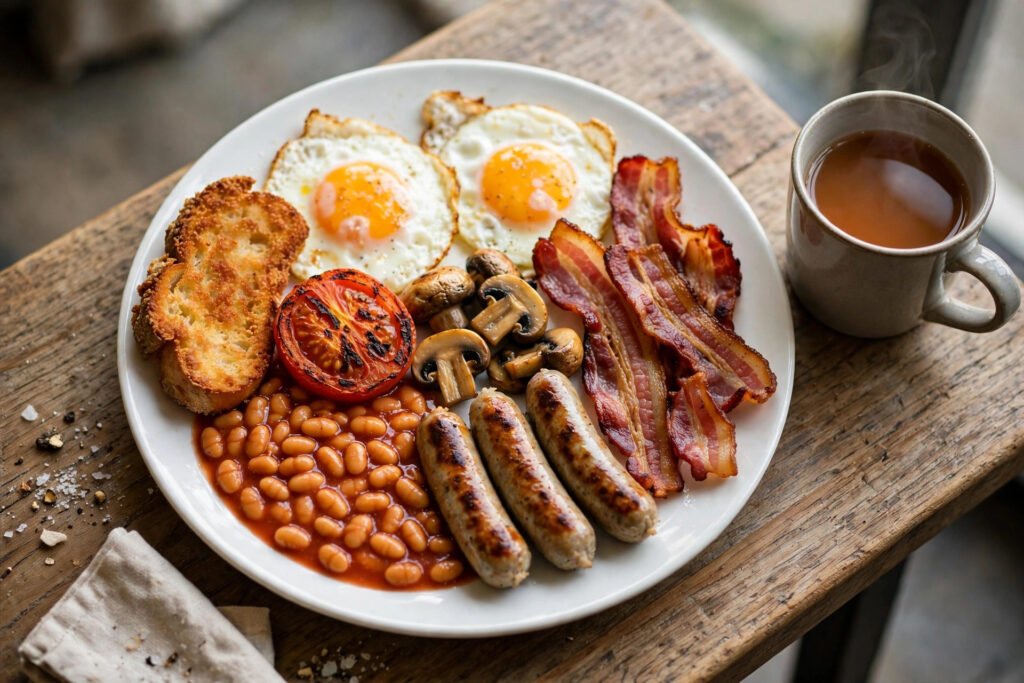
A proper full English breakfast is one of life’s great pleasures, and the cafe version always seems better than anything I make at home. For years I assumed cafes had some secret — a special grill, industrial bacon, a chef’s magic touch. Then I spent a morning chatting to the owner of my local caff while he cooked, and the truth turned out to be gloriously unglamorous: it’s about ingredient choice, pan management, and timing. No secrets, just technique. Here’s everything I learned, so your Saturday fry-up can finally compete.
Buy the Right Ingredients First
Cafes don’t use fancy ingredients — they use the right ones. This matters more than any cooking trick:
- Sausages: get proper butcher’s sausages with high meat content (85%+). Cheap sausages leak water and shrink to sad little fingers; good ones stay plump and brown beautifully. Cumberland or Lincolnshire are classic choices.
- Bacon: smoked back bacon is the cafe standard. Streaky is lovely but it’s really an American import to the fry-up — back bacon gives you that meaty bite.
- Eggs: the fresher the better, because fresh whites hold together instead of spreading across the pan. Free-range if you can.
- Beans: Heinz is the default for a reason. No shame in it — most cafes use exactly that.
- Bread: thick-sliced white for frying, or a bloomer for toast. Sourdough is a modern brunch affectation; a caff uses a proper white loaf.
- Tomatoes and mushrooms: halved tomatoes on the vine if you’re feeling posh, flat mushrooms, and don’t forget black pudding if you’re a believer (I’m a convert — try it once).
The Order of Cooking: Timing Is Everything
The single biggest difference between a cafe fry-up and a home one is that everything arrives hot at the same time. Cafes manage this with a simple sequence, and you can too. Start with the things that take longest and hold their heat well:
- Sausages first — 15–20 minutes on a medium heat, turning regularly. Low and slow; rushing them splits the skins. Once done, keep warm in a low oven (about 120°C).
- Bacon next — 4–6 minutes in the same pan, using the sausage fat. It crisps faster than you’d expect.
- Mushrooms and tomatoes — mushrooms need 4–5 minutes to release their water and then brown; tomatoes just need a couple of minutes cut-side down to char slightly.
- Beans — into a small pan on a low heat. Stir occasionally. Some cafes add a knob of butter and a pinch of pepper; I’m firmly in that camp.
- Eggs last — fried eggs take 2–3 minutes and wait for no one. Cook them at the very end so they hit the plate still glistening.
- Toast or fried bread — while the eggs cook. Fried bread in the bacon fat is the authentic caff move; toast is the slightly more respectable option.
Keep the oven on low throughout and transfer each finished item onto a warm plate in there. A cold plate murders a fry-up faster than anything — warm your plates, always.
How to Make a Full English Breakfast: The Pan Technique
Here’s what the caff owner told me that changed my fry-ups forever: one big heavy pan, medium heat, and don’t crowd it. Most home cooks use a pan that’s too small and a heat that’s too high, then wonder why the bacon burns while the sausages are raw inside. A large frying pan or a flat griddle gives everything room, and a steady medium heat cooks things through without scorching.
Fat management is the other half of it. Start with a little oil or butter, then let each ingredient contribute to the pan — sausage fat, then bacon fat, and by the time the eggs go in, they’re frying in a glorious mixture that no amount of plain oil can replicate. This is why cafe eggs taste better. It’s not magic; it’s accumulated flavour. If you’re making a proper afternoon tea later the same day, by the way, maybe go easy — a full English is not a light starter.
Fried Eggs Worth Writing Home About
Crack each egg into a cup first, then slide it into the pan — no broken yolks, no shell. Spoon a little of the hot fat over the white to help it set on top (cafes do this constantly). You want the white fully set but the yolk still runny enough to make a sauce for the toast. Season with salt and plenty of black pepper the moment they come out.
The Great Hash Brown Debate
Strictly speaking, hash browns aren’t traditional — they’re an American interloper. But most cafes serve them now and most customers expect them, so I include them without apology. Oven-cook from frozen according to the packet; they come out crispier and more even than pan-frying, and it’s one less thing in the pan. Tinned tomatoes versus fresh is another fault line: fresh grilled halves for preference, but a spoonful of good tinned plum tomatoes, warmed through, is completely legitimate.
Drinks and the Full Experience
No cafe fry-up is complete without the right drink. A proper strong tea — and I mean proper, brewed for a full three to four minutes — is the classic pairing. If you’ve never quite nailed it, our guide to brewing the perfect cup of tea will sort you out. Fresh orange juice is the other essential; the sharpness cuts through all that richness beautifully.
And then there’s the setting. Part of why a caff breakfast tastes better is the ritual: the formica table, the mug of tea, the newspaper, nowhere to be. Recreate a bit of that at home — no phones at the table, take your time, have seconds of toast. A fry-up eaten slowly on a Saturday morning is one of the cheapest luxuries in Britain.
Cost and Calories: The Honest Bit
Making it at home costs roughly £2.50–£4 per person depending on how good your sausages are, versus £8–£14 in a cafe. So you’re saving real money. On calories, let’s not pretend: a full works is 1,000–1,300 calories. It’s not health food. But as an occasional weekend treat rather than a daily habit, it’s absolutely fine — and honestly, a homemade one where you control the fat and the portions beats a greasy spoon of unknown provenance. The NHS guidance on balanced eating is worth a glance if the fry-up is becoming more of a lifestyle than a treat.
The takeaway: buy good sausages, cook low and slow, keep everything warm, and fry the eggs last in all that beautiful accumulated fat. Do that, and your kitchen becomes the caff — minus the bill.