How Much Is Anthony Hopkins Worth? Age, Height, Family and a Career in Film
A Port Talbot Childhood in a Welsh Steel Town
Philip Anthony Hopkins was born on 31 December 1937 in Margam, Port Talbot, in South Wales. He is Welsh, born in Port Talbot to Welsh parents, and the steel town of his childhood left marks that never left him: a distrust of pretension, a formidable work ethic and a lifelong sense of himself as an outsider who had to earn his place. His father, Richard Arthur Hopkins, was a baker in Port Talbot, a trade he followed with more practical success than his son ever showed at school. His mother was Annie Muriel Hopkins, née Yeates. Richard Hopkins died in 1981, by which time his son was already an established actor on two continents.
School was, by Hopkins’s own repeated account, a misery. He was a solitary, dyslexic boy who performed poorly, was largely ignored by teachers, and concluded early that he was, in his own later word for it, useless at the things schools valued. What he could do was draw, play the piano and imitate people. The arts became his refuge, and the example of another Port Talbot actor, Richard Burton, became his proof that a boy from that town could reach the stage. He studied at the Royal Welsh College of Music and Drama in Cardiff, served his national service with the Royal Artillery, and completed his training at the Royal Academy of Dramatic Art in London.
The training gave him technique; what it could not give him was temperament, and his early professional years were famously turbulent. He joined the National Theatre under Laurence Olivier in 1965, understudied the great man himself and once famously went on in his place, but he also drank heavily, quarrelled, walked out of productions and acquired a reputation as a brilliant liability. He gave up drinking in the middle of the 1970s, a decision he has credited ever since with saving both his career and his life, and the actor who emerged from that crisis was the one the world came to know: disciplined, courteous, terrifyingly well prepared and utterly unsentimental about his own talent.
Margam Birth, Stella and $120 Million: The Facts in Brief
| Margam Birth, Stella and $120 Million: The Facts in Brief | Details |
|---|---|
| Born | 31 December 1937, Margam, Port Talbot, Wales |
| Age | 88 |
| Height | 5 ft 9 in (1.75 m) |
| Weight | No reliable published figure |
| Wife | Stella Arroyave — married 1 March 2003 |
| Children | 1 daughter — Abigail Hopkins |
| Parents | Richard Arthur Hopkins and Annie Muriel Hopkins (née Yeates) |
| Nationality | Welsh; British citizen by birth; citizen of the United States since 12 April 2000 (dual citizenship) |
| Net Worth | $120 million (Celebrity Net Worth) |
| @anthonyhopkins |
From Olivier’s National Theatre to Streaming at Eighty-Eight
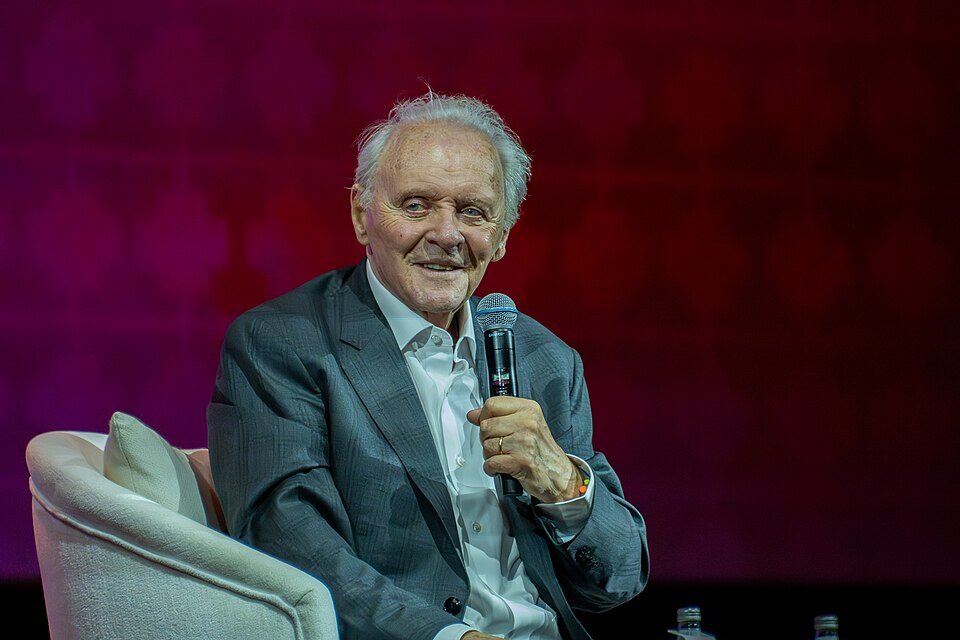
Sir Anthony Hopkins has been acting professionally for more than sixty years, and the simplest summary of his standing is that each generation of audiences has discovered him for itself. Theatregoers of the 1960s knew a formidable stage actor. Television audiences of the 1980s knew a master of prestige drama. The whole world, from 1991 onwards, knew Hannibal Lecter. And audiences in 2021 watched an eighty-three-year-old give a performance as a man losing his memory that many critics ranked with the finest of his life. Longevity on that scale is not luck. It is craft, stamina and an appetite for work that has never noticeably faded.
Celebrity Net Worth puts Anthony Hopkins’s net worth at $120 million, on a page last updated in January 2025 and still reading $120 million when checked in November 2026. The disagreement around that figure is material and is stated here at the outset: many secondary round-ups put him at $160 million or higher. Those higher figures do not appear on the tracker’s own current page, and no Forbes or Sunday Times Rich List individual figure exists to support them. This profile uses $120 million, attributes it every time, and explains the position in full in the detailed section below.
Stella Arroyave and Twenty-Three Years of Calm
Hopkins has been married to Stella Arroyave since 1 March 2003, a marriage that has now lasted more than twenty-three years and that he credits, in interview after interview, with the calm of his later life. Arroyave, who dealt in antiques when they met, has worked as a producer and director, and the couple’s public appearances present a picture of settled companionship a world away from the turbulence of his younger years. She is his third wife. His first marriage, to Petronella Barker, lasted from 1966 to 1972. His second, to Jennifer Lynton, lasted from 1973 to 2002. Both belong to the period before his present marriage and are recorded here as matters of public record.
His nationality deserves the accuracy his keyword record requires, because it is often stated loosely. He is Welsh, born in Port Talbot, and a British citizen by birth. On 12 April 2000 he was naturalised as a citizen of the United States, while retaining his British citizenship — dual citizenship, held openly and discussed by him in those terms. The knighthood he received in 1993 was retained after his naturalisation, and he remains Sir Anthony Hopkins on both sides of the Atlantic. His life is now divided principally between the United States and Britain, and his pride in his Welsh origins has never been in any doubt to anyone who has heard him speak about Port Talbot.
He has one child. Abigail Hopkins was born on 20 August 1968, during his first marriage, to Petronella Barker. She works as an actor and musician. The relationship between father and daughter was estranged for a long period — a matter of public record acknowledged by both parties, in a period that coincided with the worst of his drinking years — and a reconciliation in the 2010s, also acknowledged by both, brought them back into contact. Hopkins has spoken about his failings as a young father with the same unsparing honesty he applies to his drinking, and this profile records the estrangement and the reconciliation alike, because both are part of the record the family itself has made public.
His father Richard, the Port Talbot baker who died in 1981, and his mother Annie Muriel remain the founding figures of his story. His property arrangements are private and are not detailed in this profile. What is public, and delightful to his millions of followers, is his daily creative life in his late eighties: painting, playing the piano, composing and reading scripts.
The Elephant Man, Hannibal and a Second Oscar for The Father
1967 to 1979: stage training, The Lion in Winter and early screen work
Hopkins’s screen breakthrough came quickly once the cameras found him. In The Lion in Winter in 1968 he played Richard, the future king, opposite Peter O’Toole and Katharine Hepburn, and held his own in that company at thirty. A film of Hamlet followed in 1969, along with steady work in British pictures through the 1970s including Young Winston, A Bridge Too Far and the ventriloquist drama Magic, in which his performance as a performer losing his grip on reality drew serious critical attention. Television brought him major recognition too, including a BAFTA for War and Peace in the early 1970s. He was also, throughout this period, a working stage actor of real standing, appearing in major productions in London and Los Angeles even as the drinking years complicated everything around the work itself. The talent was never the question. Whether he would survive to use it was.
1980 to 1990: The Elephant Man and a decade of prestige
Sobriety steadied the career into a decade of sustained prestige. In The Elephant Man in 1980 he played Dr Frederick Treves, the surgeon who rescued John Merrick, with a quiet decency that anchored David Lynch’s most humane picture. Television performances followed that won him Emmy Awards, including his portrayal of Bruno Richard Hauptmann in The Lindbergh Kidnapping Case and of Adolf Hitler in The Bunker, a piece of casting that demonstrated the range directors now trusted him with. He played Quasimodo, Captain Bligh opposite Mel Gibson in The Bounty, and a gallery of leading roles in adaptations and dramas through the decade, alongside returns to the stage that included a celebrated run in Pravda in London. By 1990 he was among the most respected actors alive. He was not yet, in the global sense, famous. That changed in a single performance, in a part he played for barely sixteen minutes of screen time.
1991 to 2000: The Silence of the Lambs and the great decade
The Silence of the Lambs in 1991 cast him as Dr Hannibal Lecter, and the performance — still, courteous, motionless and infinitely dangerous — won him the Academy Award for Best Actor and entered the permanent mythology of cinema. What followed was one of the great decades of any actor’s life. Howards End in 1992, Bram Stoker’s Dracula the same year, The Remains of the Day in 1993, in which his portrait of a butler who has sacrificed his entire emotional life to duty was widely considered a masterpiece of restraint, Shadowlands as C. S. Lewis, Legends of the Fall, Nixon in the title role, which brought another Oscar nomination, Surviving Picasso, Amistad, The Mask of Zorro and Meet Joe Black. He returned to Lecter at the decade’s turn. Honours kept pace with the work: he had been appointed CBE in 1987 and was knighted in 1993. Readers comparing the earnings of that era’s defining performers may find our profile of another distinguished screen performer’s net worth and career an interesting companion piece.
2001 to 2016: Hannibal, franchise work and reinvention on television
The new century opened with Hannibal in 2001 and Red Dragon in 2002, completing his Lecter trilogy to enormous commercial returns. The middle years mixed leading roles in pictures such as Fracture, where his courtroom duel with a young prosecutor showed the old menace intact, with character work in larger productions: he played Odin in the Thor pictures from 2011, bringing genuine gravity to a comic-book universe, and Alfred Hitchcock in Hitchcock in 2012. Then television, which he had largely left behind decades earlier, reinvented him once more. In Westworld from 2016 he played Dr Robert Ford, the enigmatic creator of a park of artificial beings, and the performance introduced him to a new generation of viewers who had been children when Lecter first appeared. His paintings and his compositions, written and recorded with orchestras over many years, also found growing audiences in this period, evidence of a creative restlessness that acting alone has never exhausted.
2017 to 2026: The Father, a second Oscar and a memoir
The Father in 2020 gave him the role of Anthony, an elderly man descending into dementia, in a picture told from inside the confusion itself. His performance won him his second Academy Award for Best Actor in 2021, making him, at eighty-three, the oldest winner in the category’s history, thirty years after his first. Work continued at a pace that would tire actors half his age: pictures including Locked in 2025, and a celebrated presence on Instagram at @anthonyhopkins, where his short videos of piano playing, painting and gentle absurdity have gathered millions of followers. In November 2025 he published his memoir, We Did OK, Kid, looking back over the Port Talbot childhood, the drinking, the work and the long second half of his life with characteristic plainness. It is the record of a man who believes, and says, that he has been luckier than he deserved.
The $120 Million Figure, Checked in November 2026
Celebrity Net Worth puts Anthony Hopkins’s net worth at $120 million. Its page for him was last updated in January 2025 and still read $120 million when checked in November 2026. The disagreement is straightforward to state: many secondary round-ups put him at $160 million or higher. Those figures are easy to find and widely repeated, but they do not appear on the tracker’s own current page, and there is no Forbes or Sunday Times Rich List individual figure behind them. The careful course, and the one this profile follows, is to use the tracker’s own current figure of $120 million and to record the higher circulating estimates as unverified.
The components of a fortune on this scale, accumulated over sixty years, are not hard to identify, though individual figures should be handled with care. Reported salaries for particular roles, and the grosses of the franchises he has appeared in, are earnings and production figures respectively; they are not wealth, and they are not added up here into a rival total. What can be said is structural: he has been a leading man since the 1960s, commanded top salaries through the exceptionally well-paid 1990s, returned to a signature role across three commercially successful pictures, joined a major superhero franchise in his seventies, won a second Oscar in his eighties and worked, essentially without pause, for six decades. Income sustained at that level, over that span, by a man whose personal life has been notably settled and private for the last quarter-century, supports the tracker’s reading without difficulty. The disagreement between $120 million and $160 million is a disagreement between a sourced figure and unsourced ones, and readers are entitled to know which is which.
Still Working in Theatre and on Screen at Eighty-Eight
At eighty-eight, Hopkins stands as one of the very few actors whose career connects the age of Olivier’s National Theatre to the age of streaming and social media, and who is still working in both memory and fact. Locked in 2025, the memoir We Did OK, Kid in November 2025 and his continuing activity on Instagram through 2026 are not the schedule of a man in retirement. They are the schedule of a man who has said, often, that work is what keeps him alive, and who appears to mean it literally.
His marriage to Stella Arroyave is in its twenty-fourth year, his daughter is back in his life, his dual citizenship reflects a life lived fully in two countries, and his net worth, on Celebrity Net Worth’s current reading, stands at $120 million. The boy from Port Talbot who thought himself useless at everything that mattered became, by the verdict of two Academy Awards and sixty years of audiences, one of the greatest actors of his century. He would, characteristically, wave the compliment away. The record does not.